

 VOLUME 29, ISSUE 4 • DECEMBER 2025.

“The secret of the care of the patient is in caring for the patient” – Dr. Peabody
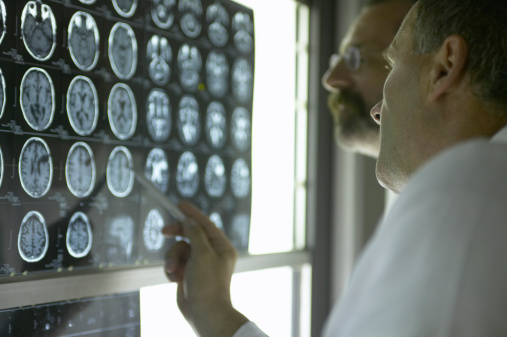
To someone who does not directly take care of patients, the field of radiology seems ripe for human replacement by AI. After all, repetition, pattern recognition, and seemingly objective gold standard diagnostics define the field. At the 2016 Machine Learning and Market for Intelligence Conference in Toronto, renowned computer scientist and Turing Award winner Geoffrey Hinton, PhD, famously announced that a radiologist is like “the coyote” that has not realized that “there is no ground underneath them” and that “we should stop training radiologists now, it is completely obvious..” to laughter from that audience.1 Nearly a decade later, the demand for radiologists far outweighs the supply. Radiology is one of the highest paying specialties in the USA with a record number of residency spots offered in 2025. This, despite the fact that nearly 80% of all FDA approved AI-enabled medical devices are classified under radiology.2, 3 Accuracy on a test in a lab will always be an insufficient metric for intelligent and empathic patient care. As AI evolves, it is likely that the role of the radiologist will evolve to become “information specialists” to integrate and interpret complex information from various clinical and imaging markers to improve diagnostic accuracy and guide treatment.4 The example of radiology serves as a lesson to the rest of medicine and those seeking to improve it.
There has been an understated yet definite shift in the conversation about the role of AI in medicine. Presumptions about AI replacing doctors are replaced by dialogue around system-based improvements to augment patient care. In other words, addressing impediments to letting doctors be doctors. In 2025, the patient-doctor experience and relationship, and resulting quality of care has been hijacked by administrative burden including soulless modules, technical issues (death by 1,000 clicks), documentation requirements, inadequate clinical support with phone calls and messages, and need for insurance authorization of approved tests and therapeutics.5 The use of AI is being investigated in these scenarios. Ambient scribing technology is able to transcribe doctor-patient conversations in the clinic, allowing doctors to focus on patients and their needs, without concern for simultaneous documentation. By allowing the doctor and patient conversation to be uninterrupted, they likely improve the diagnostic and therapeutic value of the visit.6 These scribes have been shown to improve related burnout.7 Similarly, AI can help with inpatient documentation8, improvement of resource allocation by reporting quality measures at a fraction of the time and cost9, virtual assistants for reminders for medication and scheduling, and countering unethical denials by insurance companies with letters of medical necessity.10 Effective utilization of appropriate AI models can be implemented with improvement in cost-efficiency at the enterprise scale.11 As such, AI can help place the patient at the center of their care.
We must keep certain principles in mind. Innovation and its incorporation into the everyday workflow through policy must be matched by responsibility. Additionally, it is of utmost importance that we do not let AI be a cause of “hyposkilia” during training and in clinical practice. AI is a tool in evolution that has unfortunately suffered from hype largely at the hands of those without the privilege of patient care. This must be corrected. Simultaneously, it represents a trillion-dollar industry with substantial momentum.12 If AI is used responsibly and with skepticism, it can be useful for accessing known knowns. It is imperative that physicians and patients play a significant role in further development and assessment of AI to guide good clinical care.13
References
- Geoff Hinton: On Radiology. YouTube: Creative Destruction Lab. https://youtu.be/2HMPRXstSvQ?si=U0Pse9TV2JAg9h1q.
- Mousa D. AI isn't replacing radiologists. https://www.understandingai.org/p/ai-isnt-replacing-radiologists?utm_campaign=post&utm_medium=web. 2025 October 1, 2025.
- Administration UFD. Artificial Intelligence-Enabled Medical Devices. 2025 [October 20, 2025]; Available from: https://www.fda.gov/medical-devices/software-medical-device-samd/artificial-intelligence-enabled-medical-devices.
- Jha S, Topol EJ. Adapting to Artificial Intelligence: Radiologists and Pathologists as Information Specialists. Jama. 2016 Dec 13;316(22):2353-4.
- Mahajan A, Lees AJ. "The Machine Will See You Now": A Clinician's Perspective on Artificial "Intelligence" In Clinical Care. Mov Disord Clin Pract. 2025 May;12(5):588-91.
- Stokel-Walker C. The “ambient scribe” tools listening to and summarising your doctor-patient consultations. BMJ. 2025;389:r663.
- Olson KD, Meeker D, Troup M, et al. Use of Ambient AI Scribes to Reduce Administrative Burden and Professional Burnout. JAMA Netw Open. 2025 Oct 1;8(10):e2534976.
- Williams CYK, Subramanian CR, Ali SS, et al. Physician- and Large Language Model-Generated Hospital Discharge Summaries. JAMA Intern Med. 2025 Jul 1;185(7):818-25.
- Boussina A, Krishnamoorthy R, Quintero K, et al. Large Language Models for More Efficient Reporting of Hospital Quality Measures. Nejm ai. 2024 Oct 24;1(11).
- Deik A. Potential Benefits and Perils of Incorporating ChatGPT to the Movement Disorders Clinic. J Mov Disord. 2023 May;16(2):158-62.
- Klang E, Apakama D, Abbott EE, et al. A strategy for cost-effective large language model use at health system-scale. NPJ Digit Med. 2024 Nov 18;7(1):320.
- Angus DC, Khera R, Lieu T, et al. AI, Health, and Health Care Today and Tomorrow: The JAMA Summit Report on Artificial Intelligence. JAMA. 2025.
- The L. Reclaiming care in the age of AI. The Lancet. 2025;406(10512):1535.
Read more Moving Along: