



 VOLUME 29, ISSUE 4 • DECEMBER 2025.

Predicting post-mortem α-synuclein pathology by the combined presence of probable REM sleep behavior disorder and hyposmia
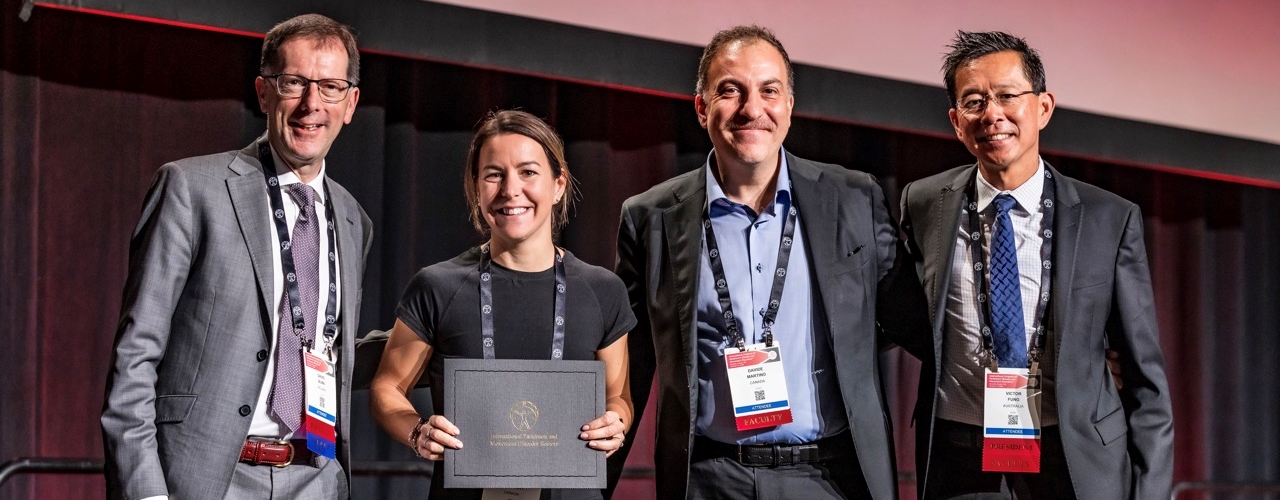
On behalf of all co-authors, we are most grateful to the Movement Disorder Society for awarding us the Movement Disorder Clinical Practice (MDCP) Research Paper of the Year Award for our published paper entitled “Predicting Post-Mortem α-Synuclein Pathology by the Combined Presence of Probable REM sleep behavior disorder and Hyposmia.”
Our motivation behind this work was to contribute a simple procedure that would improve the clinical identification of individuals with a progressive neurodegenerative α-synucleinopathy. Despite significant progress in the development of in vivo biomarkers, it remains a significant challenge to readily identify individuals with Parkinson’s disease (PD) or dementia with Lewy bodies (DLB), particularly at early disease stages. Early diagnosis is crucial for the development of disease-modifying therapies that might ultimately prevent the progressive disability that destroys so many lives.
Hyposmia, a reduced sense of smell, is a sensitive marker and a powerful predictor of PD and DLB. Additionally, idiopathic rapid eye movement (REM) sleep behavior disorder (RBD), a parasomnia characterized by dream-enactment behavior and loss of REM atonia, is a strong known predictor of a final clinicopathological diagnosis involving α-synuclein pathology, including PD, DLB, and multiple system atrophy. Smell identification tests are of particular interest as they are low-cost and easy to implement. Additionally, while definite RBD diagnosis requires video-polysomnography, measures that are costly and time consuming, probable RBD may be diagnosed by history and with the help of validated screening questionnaires.
In this work, we therefore aimed to investigate the combined value of hyposmia and a clinician diagnosis of probable RBD in predicting the post-mortem histopathological presence of Lewy type α-synucleinopathy in the brain. To do so, we leveraged data from the Arizona Study of Aging and Neurodegenerative Disorders (AZSAND) and investigated a total of 652 individuals that had completed movement and cognitive examinations, assessment of probable RBD and an olfactory identification test proximate to death and autopsy.
Our results demonstrate that sensitivity of RBD for predicting α-synucleinopathy was 38.8% and specificity 88.8%, whereas sensitivity of hyposmia was 74.4% and specificity 73.4%. When combining both measures, sensitivity was 34.3% and specificity increased to 97.2%.
Our main finding demonstrates that the combination of hyposmia and probable RBD is highly specific for predicting the post-mortem presence α-synuclein pathology, with extremely few false positives. This strategy may provide a cost-effective and relatively simple means of predicting Lewy body pathology in a broader community. This is the largest clinicopathological study to date investigating this question. These results move the field forward by reinforcing the clinically shown link between Lewy pathology, RBD, and hyposmia through neuropathologically validated clinicopathological evidence.
We deeply thank all the participants and their families for their selfless dedication. We also thank all the AZSAND personnel that participated in the decades-long effort needed to collect the clinical and pathological data used in this study.
Listen to a podcast interview about this article:  Listen now
Read more Moving Along: