
 VOLUME 29, ISSUE 4 • DECEMBER 2025.

The International Parkinson and Movement Disorder Society (MDS)-endorsed DWEP course on “Holistic approach to tremor, chorea, and myoclonus from phenomenology to treatment” was November 14-16, 2025 at the Istanbul Health and Technology University in Istanbul, Turkiye.
It was my great pride to organize this first Developing World Education Program (DWEP) course in Turkiye with the MDS-European Section and Prof. Kailash Bhatia, the course co-director. This 3 -day course provided a comprehensive overview, focusing on the most common hyperkinetic movement disorders of tremor, chorea, and myoclonus from phenomenology to treatment, with an esteemed MDS-sponsored faculty of movement disorders experts.

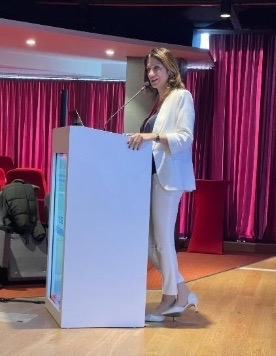
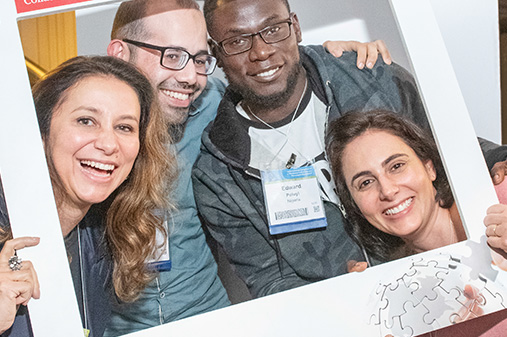
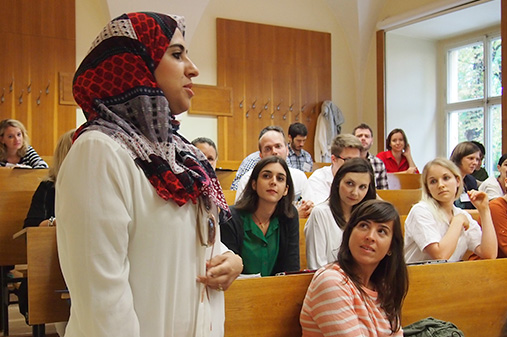
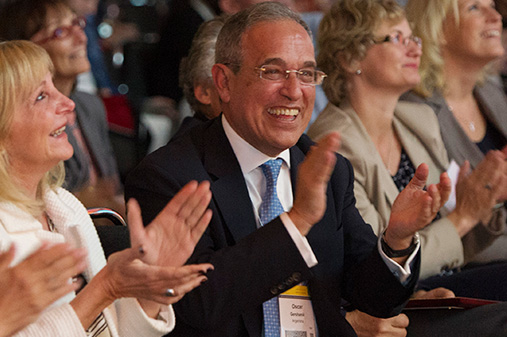
We had 103 enthusiastic attendees from different regions of Turkiye, as well as from neighbouring countries such as Georgia, Ukraine, and Libya in a well-balanced representation of practicing general neurologists, movement disorders specialists, residents and fellows, and last-grade students. The attendees participated in the course interactively with questions and answers, as well as delightful discussions from the very first day to the final session of the last day. Everyone engaged with great interest, showcasing their commitment to enhancing their knowledge and skills in these common hyperkinetic movement disorders, from diagnosis to management strategies.
The first day started with warm welcome of the course directors and the local committee member Prof. Murat Emre. Participants had a chance to recognize the current definition and classification of tremor with the common presentations of different types of tremor, and learned how to examine a patient with tremor through interactive lectures from Prof. Bhatia at the morning sessions, which were followed by the genetics and neuropathology, addressed by Prof. Okan Dogu.
A brief coffee break allowed the attendees to come together with the MDS faculty for refreshments. The differential diagnosis and diagnostic algorithm for tremor, including clinical and neuroimaging diagnostic approaches, were comprehensively covered by Prof. Cristian Falup-Pecurariu. Rare tremor syndromes with cases were discussed by Prof. Dogu before lunch. The participants enjoyed lunch with magnificent view of the Golden Horn, Istanbul, at the terrace of the Istanbul Health and Technology University. Moving on to the treatment of tremor at the afternoon sessions, Prof. Falup-Pecurariu discussed pharmacological treatment strategies. Other treatment options in tremor, including botulinum toxin, surgery, TMS, and more with the recent advances were reviewed and summarized by Prof. Degirmenci.
The first day of the course concluded with an interactive video cases session on tremor by Prof. Bhatia, which was extremely informative. The participants had a chance to recognize various cases of tremor with challenging phenomenology, and to discuss differential diagnosis and treatment strategies.
Following the closing remarks of the first day of the course, the faculty and all participants came together at the opening ceremony, enjoying dinner with the splendid view of the Golden Horn region of Istanbul, which allowed all participants to meet the MDS experts and network.
The topic of the second day was chorea, and the sessions were co-chaired with Prof. Elena Moro, Prof. Emre, and Prof. Degirmenci. The day started with the fundamentals of chorea, including the phenomenology, definition, and classification, summarized by Prof. Bulent Elibol, then followed by the genetics and neuropathology of chorea by Prof. Francesca Magrinelli.
Following a brief coffee break, the morning sessions concluded with the algorithmic approach of ‘acquired’ causes of chorea, which was summarized by Prof. Murat Gultekin, and a brilliant update on Huntington’s disease by Prof. Magrinelli. The afternoon sessions started with the paroxysmal choreiform movement disorders, which was comprehensively covered by Prof. Michele Tinazzi and followed by the treatment session including pharmacological, non-pharmacological, and surgical strategies, reviewed by Prof. Yesim Sucullu Karadag.
All participants enjoyed the interactive discussion sessions following each talk with questions & answers. The second day concluded with the closing remarks of Prof. Elena Moro, Prof. Bhatia, and Prof. Degirmenci.
The last day of the course fully engaged the attendees with great interest, and covered myoclonus from phenomenology to treatment. Starting with the definition and classification of myoclonus by Prof. Bulent Elibol, the clinical approach was discussed interactively with video cases by Prof. Degirmenci. Following brief coffee break, myoclonus with its mimickers, as well as electrophysiology and laboratory investigations, were brilliantly covered from all aspects by Dr. Anna Latore. The pharmacological and surgical treatment strategies in myoclonus and myoclonus syndromes were summarized by Assoc. Prof. Ozge Gonul Oner at the last session of the course, followed by lunch.
We wrapped up the course with a summary and closing remarks from Prof. Bhatia, Prof. Moro, and myself, being extremely thankful to our outstanding faculty for sharing their expertise with our attendees, including the movement disorders specialists as well as the young attendees who were eager to learn more and enthusiastic to get involved in the field of movement disorders.
We also express our sincere gratitude to the MDS-European Section for their support through the MDS Developing World Education Program (DWEP), of which the “Holistic approach to tremor, chorea and myoclonus from phenomenology to treatment” course was the first of its kind in my country and provided significant value for the emerging movement disorder specialists to enhance their knowledge and awareness on these common hyperkinetic movement disorders of clinical practice.
Read more Moving Along: