





 VOLUME 30, ISSUE 1 • March 2026. Full issue »

Session Highlight: 2026 PAS Congress
Genetic testing in movement disorders: Optimizing test selection and report interpretation
Over the past decade, genetics has become an increasingly important part of movement disorders research and clinical care, a trend clearly reflected in the MDS meetings. An ever-growing number of presentations — and even challenging clinical cases featured in video sessions — now involve genetic findings. At the same time, access to genetic testing across the Pan American region has expanded, thanks in part to local and regional initiatives. As a result, it is becoming essential for movement disorder specialists to understand the different types of genetic tests available, their strengths and limitations, and how to interpret and communicate results in a clear and meaningful way to patients and families. This need was the focus of the session, in which three outstanding speakers provided practical, easy-to-understand guidance on selecting appropriate tests and making sense of genetic reports in everyday clinical practice.
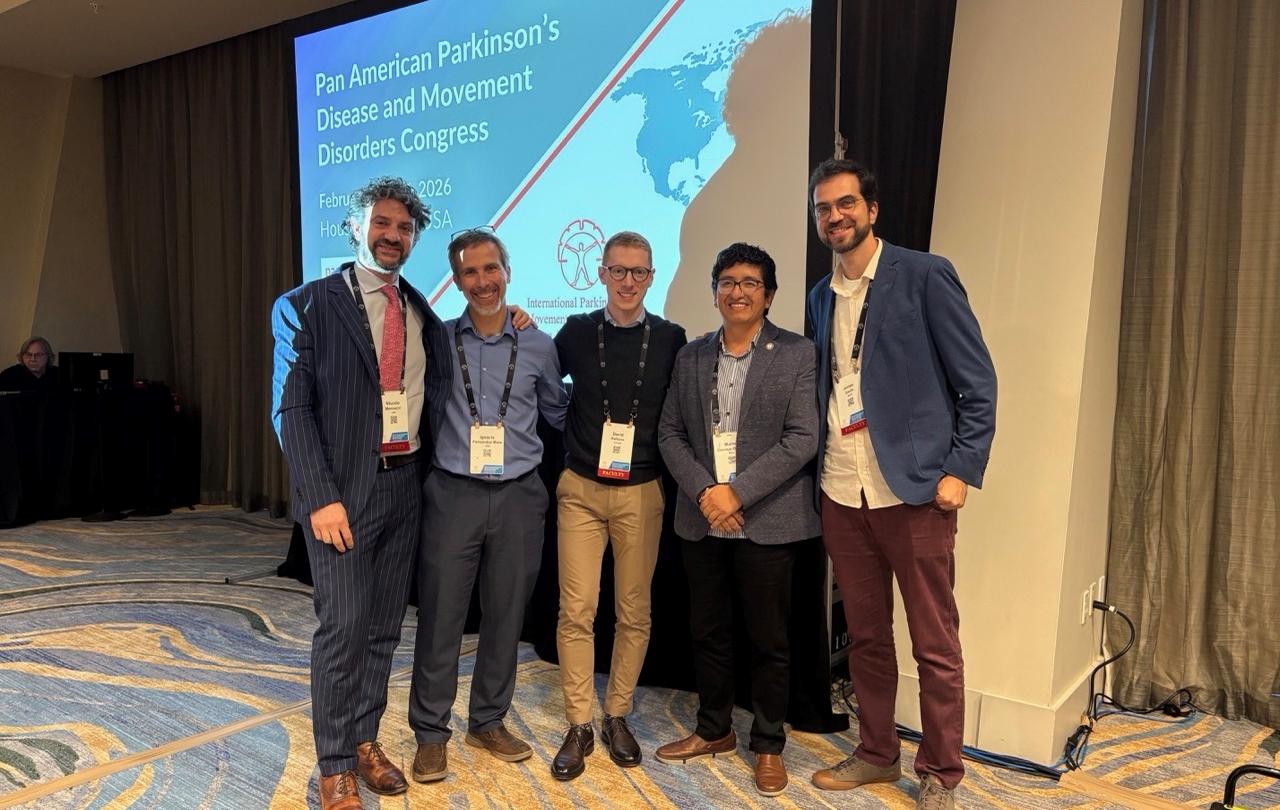
In the opening talk, “What movement disorder neurologists should know about genetic testing,” Dr. Niccolo Mencacci from Northwestern University (Chicago, USA) provided an overview of genetic testing technologies relevant to movement disorder specialists, offering practical guidance for clinical implementation.
The talk reviewed current approaches such as gene panel sequencing, whole‑exome sequencing (WES), short‑read whole‑genome sequencing (srWGS), and emerging long‑read sequencing technologies. For each method, the presentation highlighted diagnostic yield, strengths, and limitations. Using real case examples, the presentation illustrated how WES and WGS can uncover unexpected or complex genetic etiologies, including neurodevelopmental disorder-associated genes in dystonia and recessive disorders undetected by standard panels. Long‑read sequencing was introduced as a transformative but still emerging tool capable of resolving complex structural variants and large repeat expansions. The talk also stressed the importance of equitable access to genetic testing, showcasing initiatives such as PD GENEration: Powered by The Parkinson's Foundation, GP2, and LARGE‑PD, which expand testing to diverse and underrepresented populations. Finally, it underscored the need for improved genetic education and counseling, presenting new training modules to support clinicians.
In the second talk, “Optimizing Genetic Test Selection: Variants, Repeats & Strategies,” Dr. David Pellerin from McGill University (Montreal, Canada) underscored that genetic testing in movement disorders must be driven by the underlying molecular mechanism and clinical phenotype — not by the perceived breadth of a test. Distinct technologies detect different variant classes: short-read sequencing has key limitations for repeat expansions and structural variants, and so-called “comprehensive” panels may omit clinically relevant mechanisms. Repeat expansions — now associated with more than 60 neurological disorders — are a common cause of ataxia, chorea, and complex parkinsonism and require dedicated testing for accurate diagnosis. Through real-world cases, he demonstrated how mechanism-informed, variant-aware test selection is essential to close the diagnostic gap and avoid missed diagnoses.
In the last talk, “Genetic Report Interpretation: Challenges and Best Practices,” Dr. Jonas Saute from Hospital de Clínicas de Porto Alegre (Porto Alegre, Brazil) discussed variant prioritization in broad genomic tests such as exome and genome sequencing, highlighting essential terminology for clinicians. He distinguished primary findings, related to the patient’s phenotype, from secondary findings, which should only be reported when actionable and clinically impactful, requiring stricter evidence thresholds. He emphasized the importance of pre- and post-test genetic counseling.
Dr. Saute reviewed variant classification under the 2015 ACMG guidelines (Richards et al., 2015), which combine weighted evidence to categorize variants from benign to pathogenic, and referenced the ClinGen Bayesian framework (Tavtiglan et al., 2018, 2020). He stressed the distinction between variant classification and clinical interpretation, a shared responsibility between laboratory and clinician. Importantly, variants of uncertain significance (VUS) are not diagnostic. Through real cases, he illustrated both insufficient pathogenic findings and VUS reclassification, underscoring the need for cautious interpretation to avoid missed or incorrect diagnoses.
The session concluded with an engaging discussion with the audience, moderated by the session chairs, Dr. Ignacio F. Mata from Cleveland Clinic (Ohio, USA) and Dr. Mario Cornejo-Olivas from Universidad Científica del Sur (Lima, Peru). This exchange reflected the growing interest among clinicians in incorporating genetic testing into everyday practice to expand access to genetic testing and expertise across diverse healthcare settings, including regions with limited resources, to ensure more equitable implementation of precision medicine in movement disorders.
References
- Richards S, Aziz N, Bale S, Bick D, Das S, Gastier-Foster J, Grody WW, Hegde M, Lyon E, Spector E, Voelkerding K, Rehm HL; ACMG Laboratory Quality Assurance Committee. Standards and guidelines for the interpretation of sequence variants: a joint consensus recommendation of the American College of Medical Genetics and Genomics and the Association for Molecular Pathology. Genet Med. 2015 May;17(5):405-24. doi: 10.1038/gim.2015.30. Epub 2015 Mar 5. PMID: 25741868; PMCID: PMC4544753.
- Tavtigian SV, Greenblatt MS, Harrison SM, Nussbaum RL, Prabhu SA, Boucher KM, Biesecker LG; ClinGen Sequence Variant Interpretation Working Group (ClinGen SVI). Modeling the ACMG/AMP variant classification guidelines as a Bayesian classification framework. Genet Med. 2018 Sep;20(9):1054-1060. doi: 10.1038/gim.2017.210. Epub 2018 Jan 4. PMID: 29300386; PMCID: PMC6336098.
- Tavtigian SV, Harrison SM, Boucher KM, Biesecker LG. Fitting a naturally scaled point system to the ACMG/AMP variant classification guidelines. Hum Mutat. 2020 Oct;41(10):1734-1737. doi: 10.1002/humu.24088. Epub 2020 Aug 30. PMID: 32720330; PMCID: PMC8011844.
Read more Moving Along: