





 VOLUME 30, ISSUE 2 • June 2026. Full issue »

How to manage cognitive challenges in Parkinson's disease in rehabilitation
Cognitive difficulties in Parkinson's disease (PD) begin at diagnosis and worsen progressively, ultimately affecting up to 83% of people with 20-year survival (1). Changes can be either continuous (gradual disease progression) or acute (sudden onset due to medication changes, infections, or stressful events). Sudden worsening always warrants urgent medical review. Any new or aggravated cognitive complaint should prompt careful assessment of causative factors, including medication effects, sleep, anxiety, depression, inactivity, and dual-task interference, as well as identification of what makes those symptoms better or worse (2). Non-pharmacological therapies can be considered once physiotherapy interventions and exercise have significantly enhanced global cognitive function (3, 4).
Practical tips on how to address cognitive difficulties in rehabilitation clinical practice: |
|
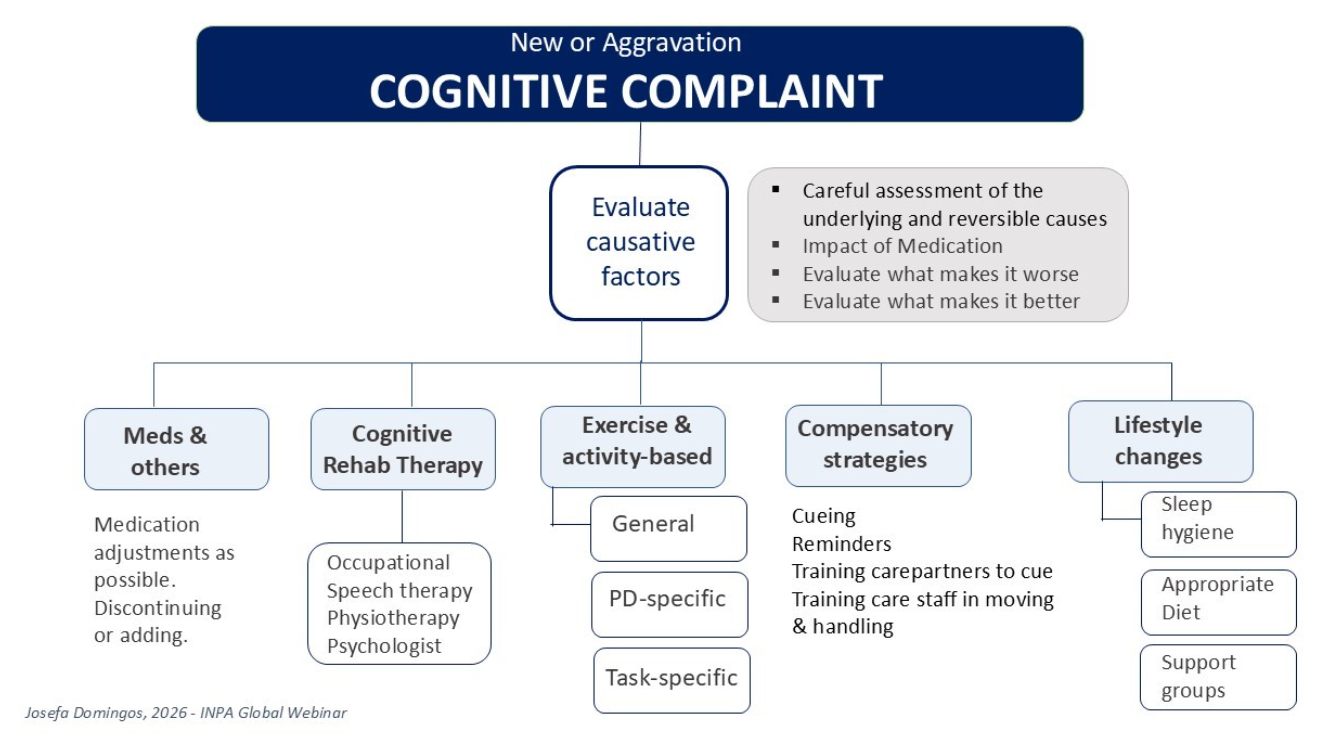
Figure 1: An example framework for managing cognitive complaints in rehabilitation.
In summary, cognitive difficulties in PD start at diagnosis and progressively worsen, underscoring the importance of routine cognitive monitoring across the disease continuum. Although cognitive rehabilitation remains an emerging intervention with an evolving evidence base, it already represents a meaningful component of a comprehensive care plan. Task-specific training and multimodal light-to-moderate intensity exercise demonstrate consistent benefits for global cognition and executive function, while compensatory strategies and targeted lifestyle modifications address functional impact across daily activities. Taken together, the available evidence supports early, individualized, and sustained intervention to improve cognitive trajectories in this population.
References
- Hely MA, et al. The Sydney multicenter study of Parkinson’s disease: the inevitability of dementia at 20 years. Mov Disord. 2008;23(6):837-844
- Seppi K, Ray Chaudhuri K, Coelho M, Fox SH, Katzenschlager R, Perez Lloret S, Weintraub D, Sampaio C; the collaborators of the Parkinson's Disease Update on Non-Motor Symptoms Study Group on behalf of the Movement Disorders Society Evidence-Based Medicine Committee. Update on treatments for nonmotor symptoms of Parkinson's disease-an evidence-based medicine review. Mov Disord. 2019 Feb;34(2):180-198. doi: 10.1002/mds.27602. Epub 2019 Jan 17. Erratum in: Mov Disord. 2019 May;34(5):765. doi: 10.1002/mds.27684. PMID: 30653247; PMCID: PMC6916382.
- Kim R, Lee TL, Lee H, Ko DK, Lee JH, Shin H, Lim D, Jun JS, Byun K, Park K, Jeon B, Kang N. Effects of physical exercise interventions on cognitive function in Parkinson's disease: An updated systematic review and meta-analysis of randomized controlled trials. Parkinsonism Relat Disord. 2023 Dec;117:105908. doi: 10.1016/j.parkreldis.2023.105908. Epub 2023 Oct 26. PMID: 37922635.
- Hu S, Lei J, You HJ. Exercise for Non-Motor Symptoms of Parkinson's Disease: An Evidence-Based Review of Clinical Trials, Dosing Considerations, and Mechanistic Insights. Neural Plast. 2026;2026(1):e7191029. doi: 10.1155/np/7191029. PMID: 41918452.
Read more Moving Along: