
 VOLUME 30, ISSUE 2 • June 2026. Full issue »

Building capacity and lasting networks: Reflections from the MDS African Section Train-the-Trainer Program
One of the most rewarding experiences this year has been directing the 2025-2026 MDS African Section Train-the-Trainer (TTP) Program for General Practitioners. As course directors, we envisioned this program as more than a traditional educational initiative. Our goal was to create an environment where clinicians from across Africa could come together, learn from experts and from each other, and ultimately return to their communities to become educators and advocates for movement disorders training.
Ten trainers were selected from diverse healthcare systems and practice environments across Africa, including Burkina Faso, Ethiopia, Ghana, Kenya, Madagascar, Malawi, Niger, Nigeria, and Tanzania. Our trainers had varying levels of prior exposure to movement disorders, but they all had a desire to improve the care of patients living with Parkinson’s disease and other movement disorders within their home settings.
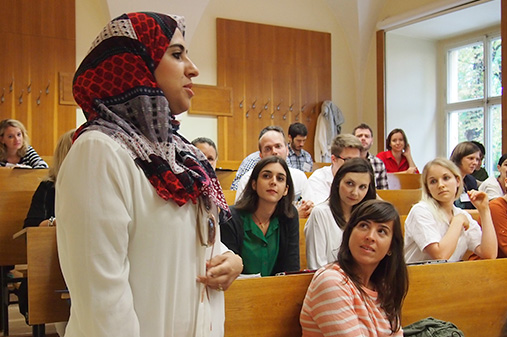
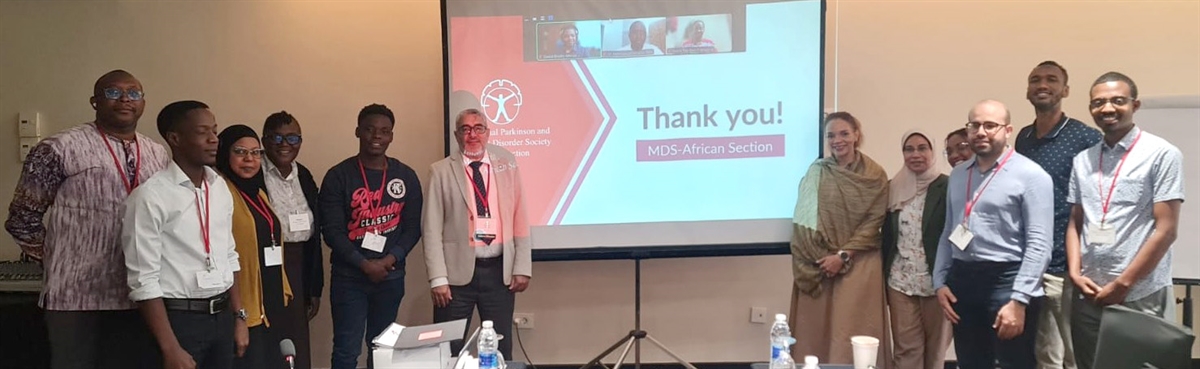
The training phase combined online learning sessions from March to April 2026, followed by a two day in-person workshop in Cairo, Egypt. The online component provided an opportunity to establish a strong baseline of knowledge while allowing participants flexibility within their demanding professional schedules. Through both live and pre-recorded lectures, participants were introduced to core concepts in movement disorders and Parkinson’s disease management.
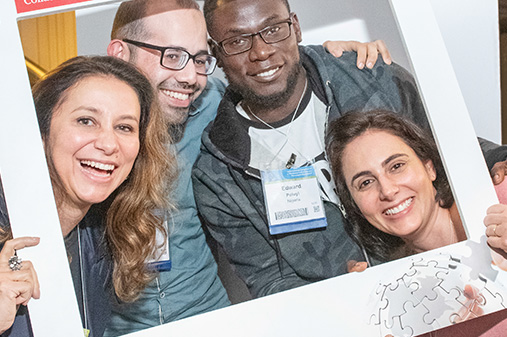
Preparing for the in-person workshop in Cairo, Egypt illustrated some of the difficulties of organizing such programs within Africa, with visa and travel logistics preventing two trainers, one course director, and several planned faculty from attending. Despite these challenges, the in-person workshop became an important point of consolidation and growth. Bringing participants together physically transformed the educational experience and discussions that had begun online continued during workshops and informal interactions. Hands-on sessions allowed participants to engage in practical learning.
Our faculty also played an enormous role in the success of the course. We had the privilege of working with an outstanding group of experts whose commitment to education was evident throughout the program. Beyond their impressive expertise in movement disorders, they brought enthusiasm, generosity, and a genuine passion for teaching. Special gratitude goes to Prof. Ali Shalash for his exceptional leadership and mentoring, as well as Tamsyn Reed, our MDS Secretariat representative, for her excellent organization and keeping things moving smoothly.
We are now entering the second phase of the Train-the-Trainer initiative, where we support participants as they prepare their own local educational programs. This phase embodies the true purpose of the Train-the-Trainer model. Success will not be measured solely by what participants learned during the course itself, but by how knowledge spreads outward into their local hospitals, clinics, and institutions.
As we continue this process, we are excited to see how participants adapt and apply what they have learned. The future of movement disorders care in Africa depends upon developing local expertise and strengthening professional networks.
Read more Moving Along: