
 VOLUME 30, ISSUE 2 • June 2026. Full issue »

Dr. Anthony Lang honored for pivotal contributions to the field
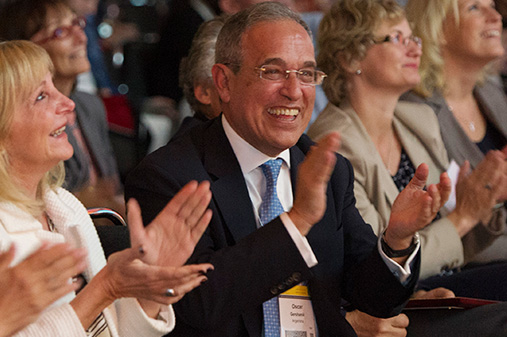
During the 2026 American Academy of Neurology (AAN) Annual Meeting, Dr. Anthony Lang was honored with the AAN Lifetime Achievement Award for Clinically Relevant Research. This highly prestigious honor presented by the AAN, recognizes leaders who have made impactful and career-long contributions to patient care and transformed therapies for neurological patients. It celebrates decades of major contributions to the Movement Disorders field that have shaped clinical practice and transformed neurological care.
For the Movement Disorders community, this award comes as no surprise. Over a career of more than four decades, Dr. Lang has made pivotal contributions to the understanding, diagnosis, and treatment of Parkinson's disease and other movement disorders. His work has influenced generations of clinicians and researchers and impacted the lives of patients worldwide.
The theme of the 2026 AAN meeting was connection, emphasizing learning from one another. In keeping with this spirit, Dr. Lang delivered a featured plenary lecture entitled "What's the Deal with Parkinson's?" in which he discussed the challenges of heterogeneity of Parkinson disease and the latest developments in research. Of importance, Dr. Lang highlighted biomarker research, including his own recent contribution just published in Nature Medicine. This paper highlighted the role of combining skin alpha-synuclein and 4R tau seeding assays with blood neurofilament light chain to assist with the diagnosis of Parkinsonian syndromes (Parkinson’s disease, multiple system atrophy and progressive supranuclear palsy).
Beyond his publications and scientific contributions, Dr. Lang has been a mentor, educator, and role model to numerous trainees across the globe. A generation of leaders in Movement Disorders have had their careers shaped by his guidance, generosity, and commitment to clinical and academic excellence.
As the movement disorders community celebrates this well-deserved recognition, we asked Dr. Lang to reflect on his career and achievements.
Dr. Lang, looking back, which contributions are you most proud of?
I think I’ve published papers on almost every aspect of movement disorders, and many of them have shaped our current diagnostic and therapeutic approaches. However, the two things that I am most proud of are 1) my educational contribution to the field in emphasizing the continuing importance of clinical movement disorder phenomenology through the annual Video Challenge session at the MDS Congress and 2) our Toronto fellowship program that has trained over 150 fellows from all over the world.
What excites you most about current research in Parkinson’s disease?
I believe that the shift from a purely clinical to a biological approach to neurodegenerative diseases is beginning to be rewarded with the first evidence of successful disease modification. After decades of failures, treatment targeting the pathogenic proteins in Alzheimer’s disease has been associated with striking changes in PET abnormalities accompanied by clinical effects that admittedly are modest but extremely promising. Following the initial A/T/N lead in Alzheimer’s, myself and others have argued for a similar approach to a biological classification of Parkinson’s disease. I’m excited by the potential for this approach to drive future research advances that will hopefully lead to successful disease modification in our field.
What continues to motivate you in your work today?
Thanks to very generous philanthropic support that I have been able to obtain over many years, we have an extremely productive basic research program driven by a number of brilliant scientists that I have the good fortune to collaborate with. This, along with the joy I get from teaching and interacting with young movement disorders fellows continues to get me up in the morning.
Outside of medicine, what helps you recharge?
From my personal perspective, a positive consequence of COVID was taking up bicycling more seriously. I now enjoy regular road biking and have just finished an annual 200k weekend ride with nine other “old guys.” Also, inspired by the fact that my father was a serious chess player, over the last few years, I’ve started to play chess online and have become quite addicted!
Read more Moving Along: