


MDCP Research Article of the Year: Early Motor Signs in Pathologically Verified Alzheimer's Disease and Lewy Body Disease



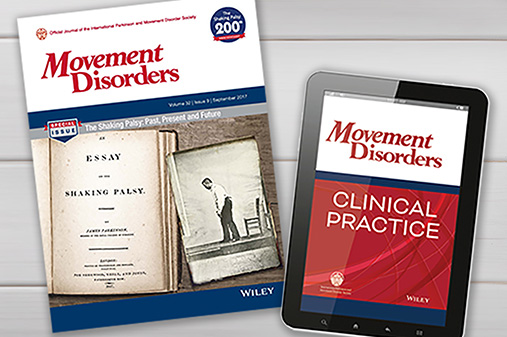
Dr. Eduardo de Pablo-Fernández: [00:00:00] Hello and welcome everyone from Seoul from the International Congress of the Movement Disorder Society. This is a new episode of the MDS podcast, the official podcast of the International Parkinson and Movement Disorder Society. My name is Eduardo de Pablo Fernández from Queen Mary University in London, and we are going to discuss today the article awarded the Research Article of the Year Award for MDCP, the Movement Disorders Clinical Practice journal.
The title is "Early Motor Signs in Pathologically Verified Alzheimer's Disease and Lewy Body Disease," and I have the first author and corresponding author, Dr. Daniel Oh, with me today. Thank you very much for joining us today.
View complete transcript
Dr. Daniel Oh: Thank you.
Dr. Eduardo de Pablo-Fernández: Your affiliations are the Neurology Department of University of Southern California, where you carried out the study and currently you are working at Kaiser Permanente.
First of all, congratulations for the award, and how did it [00:01:00] feel?
Dr. Daniel Oh: Thank you for the kind invitation. It was really out of the left field, and we're very humbled to get the recognition for our work.
Dr. Eduardo de Pablo-Fernández: Excellent. So before we dive into the findings of the study, from a movement disorder perspective you approach the issue of co-pathologies and the issues with phenotypic correlation from a slightly different angle that we have used in movement disorders. You approach this from people with a confirmed diagnosed of Alzheimer's disease with additional Lewy body pathology.
Can you tell me a bit more what prompted you to carry out the study and what was the initial hypothesis?
Dr. Daniel Oh: Yeah, the initial hypothesis was to really find early signs. There are patients, of course, who got referred to these national Alzheimer's centers for research who were referred for probably atypical or severe conditions that were primarily cognitive in impairment. And then when they tested or collected the Parkinson's scale or whatnot, they found patterns that we can further correlate with the pathological data.
So it really comes down to can we anchor or [00:02:00] find possible predictive, if I may, early motor signs in Parkinson's that we have intuition or are classically known to those that had neuropathological autopsy-proven data? So it's really to connect the dots that can give us further confirmation and confidence in our clinical practice and recognition.
Dr. Eduardo de Pablo-Fernández: Excellent.
And , I would like to highlight that the clinical data that you analyzed was from the baseline, so this is as early as possible to see if we can make the differential diagnosis. So you included a large cohort in the final analysis, over 700 cases with clinical examination and neuropathological data, with a combination of different neuropathological groups that you will probably discuss in a minute.
So this comes from the resources of the National Alzheimer's Coordinating Center. For those not familiar with the cohort, can you tell us a bit more about the cohort and the clinical and pathological data that are available?
Dr. Daniel Oh: Initially the net we cast out was participants who had an initial visit consultation for the conditions with primarily cognitive impairment, [00:03:00] but the ones who also had autopsy or neuropathological data from the center. So we excluded patients who had missing gender and also had unknown neuropathological diagnoses and also the ones who had conflicting Lewy body distribution and neuropathological data.
We boiled down from 914 to about 769 participants. So these are really ones that had initial consultation with clinical exam documentation along with the neuropathological autopsy data.
Dr. Eduardo de Pablo-Fernández: Excellent. So the clinical information was standardized for all the participants, and you collected not just cognitive clinical data but also motor data that are quite relevant for the study. Can you tell us a bit more about what clinical variables and what clinical signs you analyzed.
Dr. Daniel Oh: Yeah, we really honed in to the motor signs or the Part III of the Unified Parkinson's Disease Rating Scale. We took that sliver of data among many and looked in to see what the initial consultation at the center and what the patients showed in terms of motor signs and really into that one particular [00:04:00] scale in Part III of the UPDRS.
We looked at patients in terms of variables or age at visit, age at death, and age at onset, possibly, of the cognitive decline. These are patients, again, who were referred. We didn't have further granular detail of their cognitive progression. But the onset, we did have, of course, the usual race and gender and whatnot and APOE genotype and cognitive status.
And yeah, it really came down to the Part III score, the motor score, if you will, of the Parkinson's scale.
Dr. Eduardo de Pablo-Fernández: Excellent. And from a neuropathological perspective, they were divided in four different groups. Those with a healthy brain, those with a pure Alzheimer's disease pathology, those with a pure Lewy body pathology, and also the combination of Alzheimer's disease with Lewy body pathology.
And you try to correlate to see if there was any associations between the clinical findings and the neuropathological groups. What are the main findings of the study? How can we distinguish or how can we predict the neuropathological [00:05:00] diagnosis at these initial visits?
Dr. Daniel Oh: So the one striking result I would mention is the fact that diminished facial expression, or hypomimia, really stood out, and it was actually good enough to tell apart Alzheimer's with Lewy body disease mixed from Alzheimer's itself. And it was the only finding actually that was statistically significant after multiple corrections, and we want to be as robust as possible.
And we were quite surprised that facial expression or hypomimia rated consistently higher among the Alzheimer's disease with Lewy body pathology, co-pathology if you will, from Alzheimer's. And even though we know the intuitive signs of parkinsonian features and whatnot with Lewy body co-pathology, we were surprised that facial expression or diminished facial expression rated higher on the scale consistently and more significantly.
Dr. Eduardo de Pablo-Fernández: Excellent. It's very important that this is just performed with a routine clinical examination, so that has very important implications in clinical settings.
What are the take-home messages for [00:06:00] clinicians from the study? And also, what are the limitations when we want to generalize this to the patients that we see in clinic?
Dr. Daniel Oh: Yeah, of course. When you look at the scale that they use for the diminished facial expressions, and it's zero to four, and not everybody uses a zero out of four scale facial expression. Of course, these are highly trained centers and specific datasets.
But I think the research study that we did, the results are just the start. I'm not trying to say this is the end goal. We found and/or correlated clinical markers to neuro pathological data. We're not equating hypomimia delayed by co-pathology or disorders, but it should give a clue, a clinical clue, a start for the clinician or the stakeholders, like even families, to follow more carefully, look closer to current conditions or markers like REM sleep behavior disorder or even olfactory dysfunction.
So the things that can occur with other Lewy body features. So it gives us a little more attention, finding the right people group to start, so that we can look into other conditions that can manifest or emerge in Lewy body [00:07:00] co-pathology. Or even, one day, if we have a biomarker for alpha-synuclein or something, then it can give us the selection tools. And nowadays, I think ultimately is to even provide treatment planning or selecting the right patients. If they have a chance of or high chance of Lewy body co-pathology, maybe their response to anti-amyloid therapies/treatments might be modulated and maybe a little different.
So I think it has treatment implications possibly, carefully, I might say, prognosticating or even giving anticipatory guidance for families than just walking away saying, "Oh, there's no tremor," or, "There's no rigidity, there's nothing classic." So kind of expanding this and giving the attention to small clinical clues, very cost-effective, easy bedside, and then growing the implications to other things that can be seen in Lewy body co-pathology. It's just a start.
Dr. Eduardo de Pablo-Fernández: Excellent. I think one thing that , apart that this is like a very easy to implement bedside clinical test, if you want to call it that [00:08:00] way. I think one thing that resonates to me as well is how important cognitive and motor disorders overlap, right?
So I think it's important to perform a motor examination on cognitive disorders and the other way around, perform a cognitive examination on people presenting with motor or parkinsonian disorders.
Thank you very much for joining us today, and congratulations again for the award, and I encourage all the listeners to just read the full paper published in Movement Disorders Clinical Practice.
Thank you very much.
Dr. Daniel Oh: Thank you.
Thank you very much. [00:09:00]

Daniel Minsuk Oh, MD
Kaiser Permanente
Riverside, CA USA

Centre for Preventive Neurology, Queen Mary University of London