

 VOLUME 30, ISSUE 1 • March 2026. Full issue »

Pediatric movement disorders at the forefront: New initiatives from the MDS Pediatric SIG
Over the past several years, the field of pediatric movement disorders has experienced rapid growth — scientifically, clinically, and globally. Yet pediatric specialists often remain underrepresented within broader movement disorders forums, despite caring for patients with some of the most complex, severe, and genetically defined conditions across the lifespan. The Pediatric Movement Disorders Special Interest Group (SIG) of the International Parkinson and Movement Disorder Society (MDS) was created to address this gap by fostering connection, education, and collaboration among clinicians and scientists dedicated to childhood-onset movement disorders.
One of the most visible and successful Pediatric SIG initiatives has been the launch of the Pediatric Video Rounds. These interactive, case-based sessions bring together faculty and trainees from around the world to discuss challenging pediatric movement disorder cases in a highly educational and collegial format. Video rounds emphasize structured teaching points, audience engagement, and real-world decision-making, and they have quickly become a valued forum for shared learning across regions and career stages.
To maximize accessibility and global participation, the Pediatric SIG now runs two video rounds tracks: One aligned with Western Hemisphere time zones and one with Eastern Hemisphere time zones. This approach has allowed broader representation from all regions of the world. Faculty facilitators curate cases, guide discussion, and highlight practical clinical pearls, while maintaining an inclusive and supportive environment for trainees and early-career clinicians.
Beyond video rounds, the Pediatric SIG is entering a phase of strategic expansion. Several new initiatives are underway that reflect the SIG’s commitment to education, equity, and global engagement. These include suggesting pediatric topics for consideration in educational programming across MDS, exploration of a global pediatric movement disorders fellowship framework, and the launch of international survey efforts aimed at better understanding practice variation, barriers to care, and unmet needs in pediatric movement disorders worldwide.
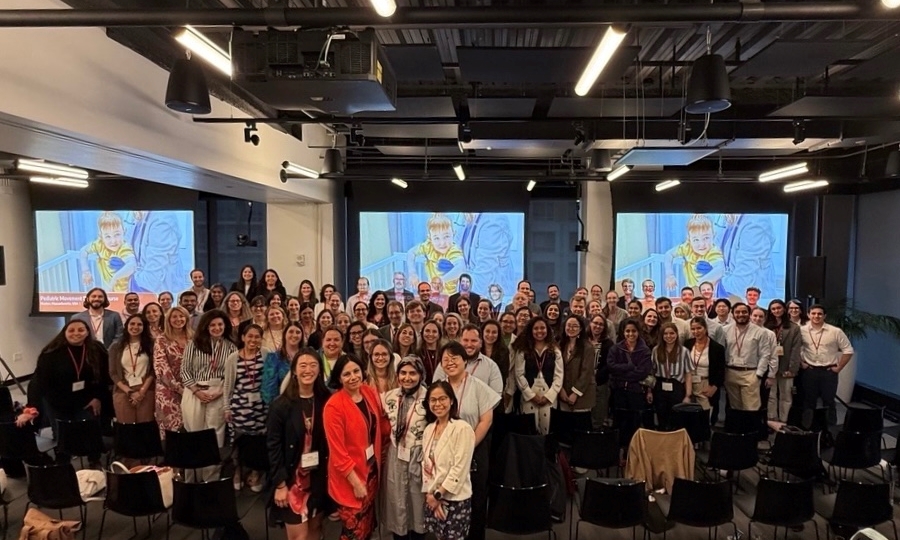
The Pediatric SIG has also played a key role in strengthening pediatric representation within major MDS educational offerings. In 2025, the inaugural MDS-PAS Pediatric Movement Disorders Course in Boston, MA, USA, brought together an international faculty and audience for an immersive, pediatric-focused educational experience. Building on the success of that meeting, discussions are already underway to establish a recurring cadence for pediatric-focused conferences and to ensure sustained pediatric visibility within the broader MDS ecosystem.
Underlying all of these efforts is a shared recognition: Childhood-onset movement disorders are not rare curiosities at the margins of the field. They are central to our understanding of neurodevelopment, neurogenetics, disease-modifying therapies, and lifelong care trajectories. Advances in gene discovery, precision medicine, neuromodulation, and biomarker development are often first realized in pediatric populations, with implications that extend well into adult neurology.
The Pediatric SIG welcomes participation from clinicians, researchers, and trainees at all levels and from all regions. Whether through video rounds, educational initiatives, collaborative research, or advocacy, the SIG aims to serve as a home for the global pediatric movement disorders community — and as a bridge between pediatric and adult movement disorders practice.
As the field continues to evolve, the Pediatric SIG remains committed to amplifying the footprint of pediatric movement disorders in our community, fostering collaboration, and ensuring that children with movement disorders — and the clinicians who care for them — remain firmly at the forefront of the MDS mission.
Members of MDS can join the Pediatric SIG at any time.
Focus: Video Case Rounds
Eastern Hemisphere Pediatric Movement Disorders Video Rounds: Expanding Access, Care, and Global Connections
Last year, the MDS Pediatric Movement Disorders Special Interest Group (SIG) launched monthly video case rounds for the Eastern hemisphere, in addition to the ongoing Western hemisphere rounds. The Western hemisphere rounds have been a great platform for connecting members from different centers and advancing care in pediatric movement disorders. At the same time, we recognize broader issues related to access, equity, and effectiveness. Because of time zone differences, it made sense to have separate rounds for each hemisphere, allowing clinicians to participate live, discuss cases, and ask questions in real time.
While both rounds welcome MDS members from around the world, the Eastern hemisphere rounds make it more feasible for young members from Asia, the Middle East, parts of Africa, and Australia/Oceania to present live. By centering real-world cases from diverse healthcare settings, the rounds broaden understanding of pediatric movement disorders beyond a Western framework. Pediatric movement disorders also vary by geography. This regional diversity is influenced by several factors, including genetics (population-specific variants), infectious diseases that are more common in certain regions, metabolic and nutritional conditions, as well as differences in healthcare access and diagnostic pathways. The Eastern hemisphere rounds enable these unique conditions to be highlighted and provide insight into locally available diagnostic and treatment approaches.
The sessions are highly interactive and run for about an hour. Presenters and moderators guide the audience through each case, with open discussion focused on video-based phenomenology and real-time questions. Lively audience engagement helps maintain a stimulating learning environment. We have also paid close attention to including young members as presenters. This has led to more first-time presenters, mentorship opportunities, and a dynamic pool of contributors from across the region.
Clinicians typically present two pediatric cases centered on video recordings of abnormal movements. The focus is first on phenomenology, followed by discussion of diagnosis. Videos are paused, replayed, and analyzed together. Each case is moderated by a senior clinician who actively promotes discussion, and attendees are encouraged to participate throughout. Different viewpoints are welcomed, especially when there is no clear answer. Through shared discussion, local diagnostic and management challenges are placed in the context of global expertise and standards. The result is a two-way exchange that strengthens both individual practice and the collective knowledge of the MDS community.
Based on the sessions so far, a pleasant surprise has been the consistent attendance and repeat participation from clinicians across the Eastern hemisphere. Once the time zone barrier was addressed, many participants became regular contributors rather than occasional attendees. There has been an increase in case submissions and first-time presenters, particularly among trainees and clinicians from regions previously underrepresented in MDS educational activities. The breadth of cases has been exceptional, including several rare genetic and metabolic disorders. Discussions have been highly interactive and non-hierarchical, with senior experts and early-career clinicians engaging as equals. The depth of phenomenology-based discussion has been outstanding. An additional benefit has been the development of ongoing mentorship relationships, cross-border consultations, and follow-up discussions beyond the sessions themselves.
The next phase aims to deepen the impact while preserving the interactive, case-based spirit of the rounds. The focus will be on strengthening regional leadership, expanding mentorship, and translating discussion into sustained collaboration. Key elements include further developing regional moderators and presenters, increasing trainee engagement, linking cases to broader MDS initiatives, and enhancing the continuity of this track.
These sessions are especially valuable for those who learn best from real cases and discussion and who want to be part of a truly global pediatric movement disorders community. This is a welcoming, case-based space to learn from peers across the region and connect with the global MDS community, and no prior experience is needed. If you work with children who have unusual movements, enjoy thinking out loud with colleagues, and want access to an international community of specialists in a friendly setting, these sessions are for you. We look forward to welcoming you to an upcoming session.
Read more Moving Along: