

 VOLUME 30, ISSUE 1 • March 2026. Full issue »

MDS-AOS offers hands-on instrument-guided botulinum toxin injection training in Manila, Philippines
The MDS-AOS Botulinum Toxin Convergence on Skills for Movement Disorders and Spasticity (ABCs-MDS) was November 25- 26, 2025 in Manila, Philippines. “ABC’s-MDS” was a pre-convention of the 47th Philippine Neurological Association annual convention, which was November 26 to 28, 2025 in Manila. The workshop was conducted under the mentorship of the course directors, Raymond Rosales (Philippines) and Sanjay Pandey (India). Other course faculty members included David Simpson (USA), Kimiyoshi Arimura (Japan), Mary Jeanne Flordelis (Philippines), and Shivam Mittal (UAE). Seven support faculty members from the Philippines, John Aldwin, Mary Mildred Delos Santos, Maria Leila Doquenia, Arlene Ng, Gerard Saranza, Michelle Ann Sy-Cleofas, and Jeryl Ritzi, assisted in administering injections to patients.
The workshop hosted 133 enthusiastic attendees, a well-balanced representation of the different countries: Australia (1), Bangladesh (4), Cambodia (3), India (10), Indonesia (39), Iraq (1), Iran (1), Japan (1), Kazakhstan (1) Lebanon (1), Malaysia (16), Myanmar (1), New Zealand (1), Pakistan (1), Philippines (40), South Korea (4), Sri Lanka (1), Thailand (4), United Arab Emirates (1), USA (2). The attendees represented a diverse spectrum of neurology professionals, including residents, fellows, and practicing neurologists reflecting their dedication to skill development.
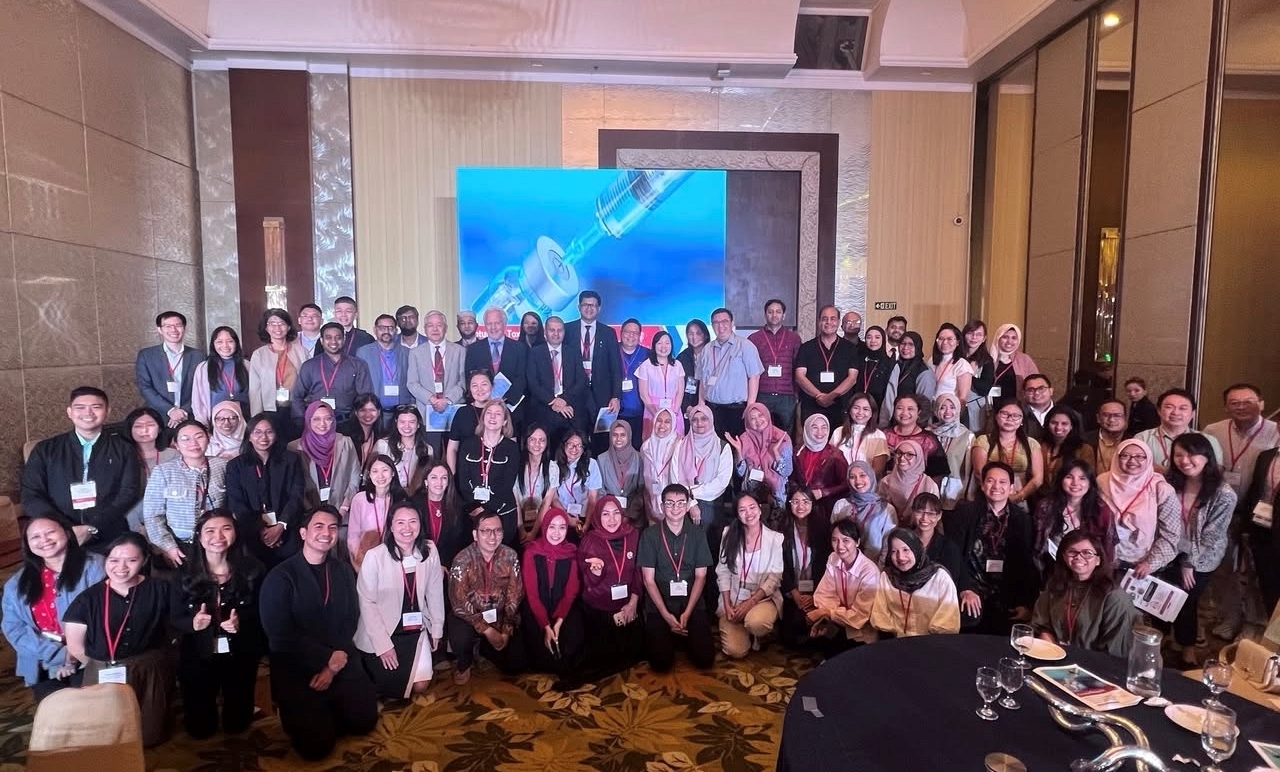
Many attendees remained until the final session, showcasing their commitment to enhancing their understanding and skills in movement disorder management. This widespread participation and active involvement underscored the workshop's success in fostering learning and collaboration within the community of movement disorders.
The main attraction of the course was instrument-guided botulinum toxin (BTX) injections by applying ultrasound, electrical stimulation, and electromyography (EMG). Live, hands-on demonstration of onabotulinumtoxinA injections upon consenting patients were delivered in the head (craniofacial dystonia, hemifacial spasm, drooling and migraine), neck (cervical dystonia), upper limb (focal dystonia [including musician’s cramp] and spasticity), lower limb (focal dystonia, childhood and adult spasticity) and truncal (abdominal dystonia in x-linked dystonia parkinsonism) regions.
The two-day workshop provided an immersive and interactive platform for learning and skill-building in botulinum toxin injection techniques. Day 1 began with didactic lectures on history, pharmacology, dilution techniques, and immunogenicity of botulinum toxin, followed by lectures on electromyography, including electrical stimulation and ultrasonography-guided localization. Subsequently, different indications for botulinum toxin were discussed, including blepharospasm, hemifacial spasm, Meige syndrome, oromandibular and lingual dystonia, cervical dystonia, upper and lower limb spasticity, tremor syndrome, and Parkinsonism. During the post-lunch session, hands-on demonstration and injection techniques were discussed. Live cases of upper limb dystonia/spasticity, lower limb dystonia/spasticity, childhood spasticity, and tremor were discussed and injected.
Day 2 focused on live demonstration and injection techniques in blepharospasm, hemifacial spasm, Meige syndrome, cervical dystonia, oromandibular and lingual dystonia, drooling, and migraine. The meeting ended with closing remarks from the course directors, Prof. Rosales and Dr. Pandey. All sessions had question-and-answer sessions where attendees asked questions and discussed different techniques regarding botulinum toxin injections. The event placed special emphasis on expanding MDS membership, encouraging participants to join the society and engage in collaborative research efforts.
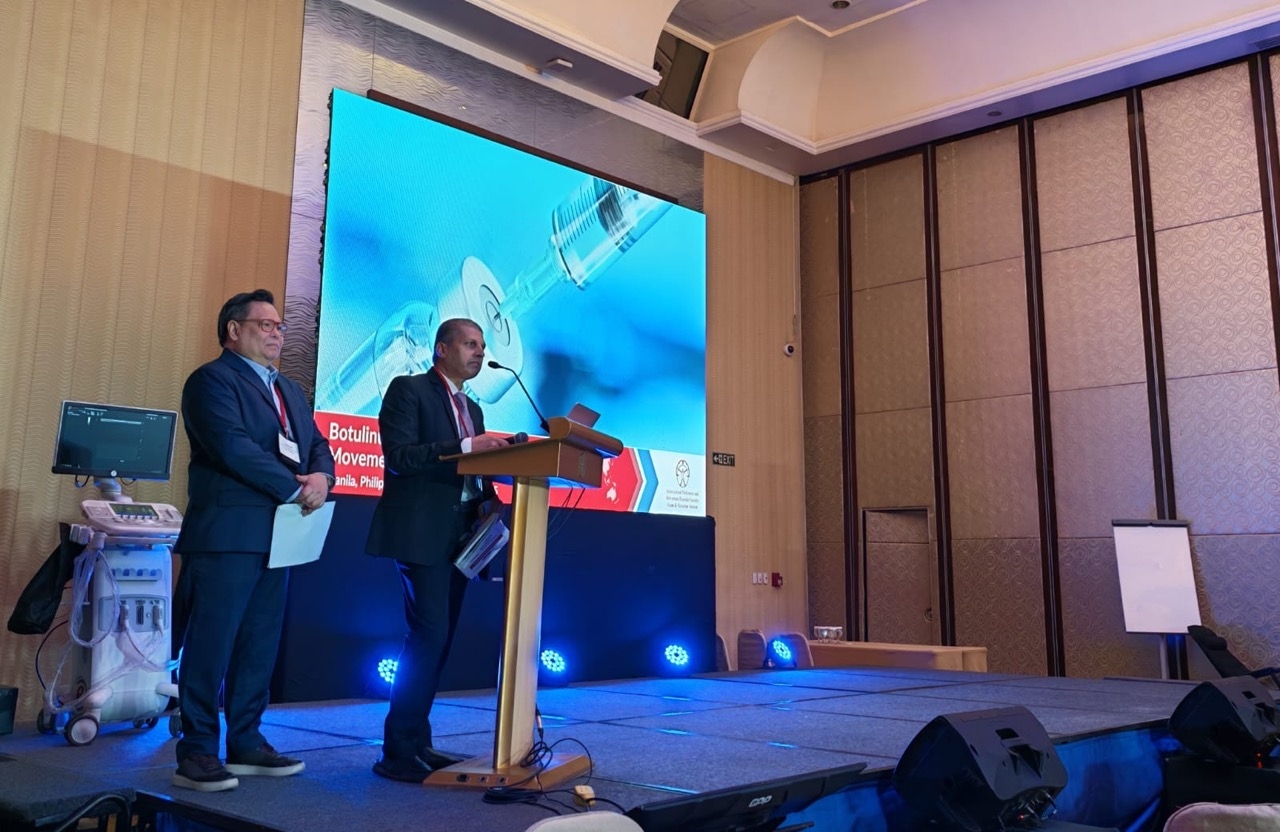
Delegates, ranging from residents to senior neurologists, expressed enthusiasm about the expert-led botulinum toxin demonstrations. Feedback from them emphasized the value of such workshops for practicing injection techniques, as these practical skills are often overlooked in standard neurology training. The live toxin injection demonstrations offered invaluable tips from experts, underscoring the need for more skills-based training opportunities in the MDS-AOS countries.
The MDS-AOS Botulinum Toxin Convergence on Skills for Movement Disorders and Spasticity is the first of its kind in the MDS-AOS region and offered significant value for emerging movement disorder specialists. It provided an essential opportunity for learning injection techniques and direct interaction with the experts. Such training opportunities are very few, making it crucial to integrate skills-based workshops into the educational journey of aspiring movement disorder specialists.
We are extremely thankful to our esteemed international, national, and local faculty members for sharing their expertise with the young delegates, addressing all their queries with patience and enthusiasm. We are thankful to the patients who traveled a long distance to join the meeting. We also express our heartfelt gratitude to MDS for their support.
View other upcoming courses in the Asian & Oceanian region »
Read more Moving Along: