A lifetime of experiences and learnings - MDS 40th Anniversary



Dr. Michele Matarazzo: [00:00:00] Hello and welcome to the MDS Podcast, the official podcast of the International Parkinson and Movement Disorder Society. I'm Michele Matarazzo from the HM CINAC in Madrid, Spain, and I'm the editor of the podcast and your host today. And today we are celebrating the 40th anniversary of the International Parkinson and Movement Disorder Society. Over the past four decades, the society has grown from a small, passionate group of clinicians and researchers into a truly global community. To look back and also to look ahead, we are recording a series of episodes focused on the contributions of members from different parts of the world.
View complete transcript
Today we'll be having a conversation with two longstanding members from the Pan-American section, Cynthia Comella from Rush University in Chicago, USA and Oscar Gershanik who is the scientific director of the Institute for Neuroscience at the Favaloro Foundation University in Buenos Aires, [00:01:00] Argentina, who have both played key roles in shaping the society and also shaping the field itself of movement disorders.
So thank you both so much for being here today.
Dr. Oscar Gershanik: Thank you for the
Dr. Cynthia Comella: We are happy to be here.
Dr. Michele Matarazzo: Let's start with the beginnings. Cindy, do you remember when and why you first joined the MDS?
Dr. Cynthia Comella: My journey to the MDS was circuitous. I started as an internist, finished three years, had Chris Goetz as my third year attending, and of course convinced me that go into neurology. And then I ended up in movement disorders. I joined the MDS in 1991.
Dr. Michele Matarazzo: So a few years ago, right?
Dr. Cynthia Comella: Oh, quite a few.
Dr. Michele Matarazzo: And what about you, Oscar? What drew you to the society and to the field?
Dr. Oscar Gershanik: Well, I'm much older than Cindy and much older than many of the other members of the society. In my time, there was no movement disorders. It was Parkinson's Disease. I was a member of the [00:02:00] International Society of Motor Disturbances, which preceded the Movement Disorder Society, and as soon as the Movement Disorder Society was founded, I joined the Society in 1985, and then in 1988 I became a member of the International Executive Committee of the Society.
So I've been in the leadership of the Society for 37 years now.
Dr. Michele Matarazzo: Wow. So a few years in the society, a few years in the leadership and you've been president also, so you've really been part of the leadership for a very long time. And over all these years, the MDS has changed a lot. Both scientifically, technologically for sure, even culturally, a lot of things have changed. It has grown a lot. And so you were mentioning this, you were, you have seen the society from the start. How did it evolve since those early days? Maybe Oscar, you wanna start with this?
Dr. Oscar Gershanik: At the beginning of the society was a [00:03:00] family event because it was very small. There were very few of us, and so the meetings were, as I mentioned before, like a family event. We would gather and discuss things, and I still remember a session in which we were sitting altogether and Mark Hallett was discussing, what is myoclonus? How can we define myoclonus? And there was participation from everybody. It was not like now that you have 3-4,000 people at a session where they cannot participate, but at that time, there was just a few of us. Now it has become a very huge event. Every single International Congress.
And that familiarity was in some sense lost.
Dr. Michele Matarazzo: And Cindy do you wanna say something about how the society has changed over the years?
Dr. Cynthia Comella: When I first started, it was a family and then it grew and it [00:04:00] grew. It became so diverse. I think the thing that maintains the family feel is the development of the sections.
Each section has a Congress and you get that sense of family when you go to the section congresses. And then you get the enormity of what the MDS is when you go to the Congress.
So it's grown tremendously. It's included allied health. It's focused on young people. Every country in the world is represented in one way or the other, within the MDS.
Dr. Oscar Gershanik: That's absolutely true because at the beginning there were no sections. There was just one single entity and that was the Movement Disorder Society. Then the two first sections that were created, the European Section and the Asian Oceanian Section, and then we felt the need to integrate the Americas, and [00:05:00] Cindy was very active in that sense together with Tony Lang and myself in creating the Pan-American Section that allowed for the integration of Latin America and North America that at that time were separated and Latin America didn't have a very good representation in the society. And then finally we decided to integrate Africa and created the African Section that was the latest addition to the society. And I agree entirely with Cindy, you get the feeling of familiarity when you go to the regional section meetings, and then you go to this enormous event that is the International Congress where you get lost in there but the proximity is not there.
Dr. Michele Matarazzo: Yeah. And talking about the evolution and the things that have changed over the years. You mentioned the regional sections but a lot of other things have happened, like for example the other committees, I'm just thinking out loud [00:06:00] now, but education committee and well of course the journals of the society have grown a lot and all other special interest groups and so on, and you have contributed to many of these things that happened.
Do you want to mention any of these things that you think have contributed significantly to the growth of the society? Maybe Cindy, if you wanna go ahead.
Dr. Cynthia Comella: Well, I think, I can remember many years ago, Werner Poewe was president and I got a call while I was in clinic and I went back there and it's Werner Poewe. It's like, oh my God. And he said, do you wanna start up an education committee? It was like, I don't know what I'm doing. But he had faith and the MDS had faith, and now the education committee run by very many, very talented people, has become explosive. And it's online presence is absolutely amazing. It's multilingual, diverse, and allows opportunities for younger people to make their entree into [00:07:00] the MDS.
Dr. Michele Matarazzo: That's fantastic. And Oscar, do you want to mention any other activities or any thing that the society has done over the years that is special to you or that you contributed to?
Dr. Oscar Gershanik: If I look back in my participation in this society, I think the major contributions that I made is first to promote the LEAP program together with Cindy and Matt Stern. Second to professionalize the rating scales program because at that time we felt that the society needed to have regular financial support and promoting in a professional way the use of our scales was a major accomplishment. And so we developed the rating scales program. Second was the integration of China, China at one point had very few representatives in the society. I took upon myself [00:08:00] to travel several times to China and talk to the leaders of movement disorders in China.
Asked them to integrate into the society because they were very reluctant because of Taiwan. And I clarified to them the thing that the society was not a conglomerate of countries. It was people, not countries. Taiwanese were not representing Taiwan. They were representing the people of Taiwan. And in the same way the people of China should be integrated in the society.
Another thing is the educational roadmap. At one point I looked at the tremendous amount of educational material that we had in our website, but it was not organized, so it was very difficult to access. And so I proposed to have a, what I call an educational roadmap.
That is the basis of all the educational programs that are now on the [00:09:00] website and that can be accessed through my MDS and your dashboard. And finally, I think that I decided that we had a committee or a task force on Africa and that task force the majority of the members were not from Africa. That was very peculiar.
So I thought maybe we should try to call upon the people from Africa and have them organize their own section, not be dependent on other people. And so I contacted the African Academy of Neurology, and they gave me a few names and I talked to them. I proposed to organize an African section, and we did, and it's a very successful section now, it has developed enormously. Now it's, I don't know Cindy if you know how many members there are from Africa, but it grew from having four or [00:10:00] five members to have 500, 600 members at the African section.
Dr. Cynthia Comella: Can I just expand a little bit on what Oscar said?
Dr. Michele Matarazzo: Of course.
Dr. Cynthia Comella: One of my proudest moments in the MDS was the formation of the LEAP Committee. And it was Oscar and Matt Stern that this was their idea. And I was fortunate enough to be able to be there at the beginning. And this program teaches leadership. We started in 2015. When you look back at the accomplishments of those who took the course in 2015 you can't help but think to yourself. I accomplished something. It has subsequently gone under the leadership of Shilpa Chitnis but it was so many years of such satisfaction and without Oscar and Matt never would've occurred.
Dr. Michele Matarazzo: Wow. You really did contribute a lot to the society [00:11:00] before the leadership, the diversity from a geographical point of view, and not only geographical, all the education. So, as part of the members of the society, I have to thank both of you, and it's fantastic to see how all of these activities and all of these initiatives have become part of the DNA of the MDS today.
So that's amazing. But I also want to look at the other side of this relationship between you and the MDS and I wanted to ask how being a part of the MDS has influenced your own careers from a scientific and professional point of view, or even from a personal point of view.
Oscar, do you wanna start?
Dr. Oscar Gershanik: You mentioned the DNA. I think the Movement Disorder Society is in our DNA. It's everything that we are. It's a family, it's a professional society, is our point of reference to everything that we do. So I think, the society has accompanied me along all my professional life.
Dr. Michele Matarazzo: And [00:12:00] Cindy.
Dr. Cynthia Comella: The society has meant, when I started in the society, I was just a young whippersnapper, and over the course of years the MDS provided me with the opportunity to grow. And I think it provides that opportunity to so many people you can grow, you can accomplish. And as Oscar said, it becomes a part of yourself. It's always been the society of my heart. Those who don't take advantage of the MDS, boy, are they making a mistake.
Dr. Oscar Gershanik: Many of my best friends are members of the society, not locally, but internationally.
Dr. Michele Matarazzo: Yeah, that's one of the things that we hear the most. And I also, I have to say that the same thing that the MDS has been a professional home and a personal home for people at every stage of their career. So you have it when you're beginning and you were mentioning before all the educational opportunities that MDS give to younger people and fellows who are interested [00:13:00] in the field. And also you can grow within and thanks to the society in your career. I really must agree with all your saying. And with all the experience you have as active members in very relevant positions of the society, we also wanted to have your opinion about the future.
As we look to the next 40 years, what do you hope or imagine for the future of the society? Cindy?
Dr. Cynthia Comella: Well, 40 years is a hard time to project.
So I, that's gonna be a toughie. But the way I see the MDS is becoming a more and more powerful society with more and more diversity, focusing on young people and bringing young people into leadership positions and they will be running the society. So I see it as a force that's going to continue to grow. That's right now even moving forward, it's something that 40 years, who knows. Five years, it's gonna be absolutely [00:14:00] amazing.
Dr. Michele Matarazzo: And Oscar, what do you think of the future of the society?
Dr. Oscar Gershanik: I think the society in the way we have observed the growth of the society in the last 40 years it has grown exponentially and I think it will never stop. It will grow and grow in the future. It will become more professional. It will become the point of reference for movement disorders for every single specialist in the world.
And I think we will have to move into other areas like patient participation, advocacy, and many other roles that we have not undertaken because they are not within the bylaws of the society. But in the future, it is probable that we have to go into those fields to participate more actively in bringing patients into the society.
And because that role of integrating patient was taken out from us [00:15:00] by WPC. And I think we have lost the opportunity to be the one and only society that integrates everything. The science, the patients, the advocacy.
Dr. Cynthia Comella: And I'd like to highlight that and emphasize what Oscar says about advocacy. 'cause if we don't advocate for ourselves, as we've found out in our country, you're not at the table.
Dr. Oscar Gershanik: Yeah. Yeah, that's true. And we have to reproduce that throughout the world. So every regional section should have a part of his activities devoted to advocacy within their own regions because it's terribly important.
Dr. Michele Matarazzo: Well, wonderful. This is a very important message and a hopeful vision for the future. And I'm sure many of our listeners shared that vision and the importance of advocacy for the future of the society. And I think that the MDS in the last few years has already started to move in that direction.
So it is [00:16:00] happening. Now before we close I'd love to hear a favorite memory or anecdote from your years with MDS, maybe a congress moment or an inspiring person that you met because of the society or through the society or something unexpected that stayed with you. Oscar, do you have any experience you wanna share with us and our listeners?
Dr. Oscar Gershanik: I think one of the greatest experience in my life within the society was in 1988, when I received a call from Stan Fahn. I had trained with Roger Duvoisin and, and Melvin Yahr, and I knew him from a distance. Stan participated in meetings, came to Mount Sinai, came to New Jersey, and so I had met him, but I was not one of his students.
He was not my mentor. In 1988, I received a call and it was Stan Fahn saying, Oscar, would you like to be a member of the International Executive Committee of the Movement Disorder [00:17:00] Society? And I said, yeah, I would like we are gonna be meeting in Boston in a few weeks, and if you can, we would like to have you there.
So I gather the little money I had. I took a plane, I flew to Boston. I arrived late in the evening and I went into a room where all these big shots of movement disorders were gathered, and Stan Fahn was presiding at that time. He was the first president of the society, and I went into the room and Stan raised said, Oscar, I knew you would come and that was my beginning as a member of the leadership of the Movement Disorder Society. That was a very gratifying moment.
Dr. Michele Matarazzo: Oh, that's a fantastic anecdote. Cindy, do you wanna share any memory with us?
Dr. Cynthia Comella: Do you know, I have so many anecdotes and I was thinking, how can I pick [00:18:00] one? And so I'm gonna generalize. Chris Geotz has been my mentor and my champion for all of my life. He has been inspirational to me, as has Carly Tanner, and then I've had this opportunity to meet Oscar, Matt Stern, Warren Olanow, Werner.
I mean, there is there are so many people that have inspired me to continue moving forward. The funniest thing I have is when Oscar sent me a picture. And the picture was he and Matt Stern sitting on a camel, and I thought, God, if the president and the president-elect can sit on a camel and ride a camel, I can do anything.
Dr. Oscar Gershanik: At that time I was the president, and that was the past-president and we had gone to Dubai. Because another of the things that the society promoted at that time was to allow a very energetic young guy from Saudi Arabia. And he [00:19:00] organized a task force for the Middle East.
And so I went there to support the development of the task force, and they had prepared this program in which we made us ride camels. And Matt and I were sitting on a camel.
Dr. Cynthia Comella: You looked very comfortable on the camel. Both of you.
Dr. Michele Matarazzo: I think those are exactly the kinds of moments that makes this community so unique and and so strong. Thank you both for sharing your memories and reflections and for everything you've contributed to the MDS and to the field of movement disorders and the whole field of movement disorders.
Thank you very much for being with me today.
Dr. Cynthia Comella: It is a pleasure.
Dr. Oscar Gershanik: Thank you. It's been a pleasure and it's been a pleasure to share this session with Cindy.
Dr. Cynthia Comella: And vice versa. It was an honor.
Dr. Michele Matarazzo: And to all our listeners, thank you for joining us in celebrating 40 years of science, collaboration and community. I'm Michele Matarazzo, and I've been talking today with Cynthia Comella and Oscar Gershanik. Thank you for joining [00:20:00] us.
Cynthia Comella, MD
Rush University Medical Center
Chicago, USA
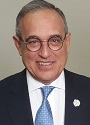
Oscar S. Gershanik
Institute of Neuroscience
Favaloro Foundation University Hospital
Buenos Aires, Argentina

Neurologist and clinical researcher HM CINAC