Collegiality and friendship - MDS 40th Anniversary



Dr. Michele Matarazzo: Hello and welcome to the MDS Podcast, the official podcast of the International Parkinson and Movement and Disorder Society. I'm Michele Matarazzo from the HM CINAC in Madrid, Spain. I'm the Editor of the podcast and your host, and today we continue our celebration of the 40th anniversary of the Society. Over these four decades, the MDS has grown into a truly global network.
View complete transcript
To mark this milestone, we are recording a series of episodes with people who can help us understand how the society became what it is today, a true reference point for the field of movement disorders. And we are doing so by traveling around the world through its different regional sections. Today our focus turns to the Asian and Oceanian section.
And I'm delighted to be joined by two leading figures who have contributed enormously, both to our field and to the Movement Disorder Society. Professor Carolyn Sue from Sydney, Australia, professor and [00:01:00] Kinghorn Chair of Neurogeneration at Neuroscience Research Australia and the University of New South Wales.
And Professor Beomseok Jeon, a better known as BJ, from Seoul Korea who is the director of the BJ Center for Comprehensive Parkinson Care and Rare Movement Disorders at Hyundae Hospital in Seoul, and currently treasurer of the MDS a role that Carolyn will actually take on in the next term as she's now Treasurer elect.
Carolyn, BJ, thank you both very much for joining us.
Prof. Carolyn Sue: Great to be here.
Dr. Michele Matarazzo: So I'd like to go back to the beginning of your journey with the MDS, Carolyn, maybe I'll start with you. Can you take us back to when you first became involved with the society? What was happening in your career at that time that made you think, this is a community I want to be a part of?
Prof. Carolyn Sue: Oh, that's a great question. Thanks. I joined the Society in 1992 when I was training in neurology. And my mentor [00:02:00] John Morris had told me about this wonderful society that he had become part of. It was a society that was based on movement disorders. He was a Parkinson's disease specialist.
And he taught me about all of the wonderful things that the society was doing at the time. And also about the history of the of the society at the time. So I joined, the first Congress I went to was in Munich. And so we uh, set about a long journey of uh, going from Australia to Europe and saw many experts in the field. These were people that I had only read their names of in the papers that they were published. So it was really I guess the rock stars of the society and of the field were all speaking at the Congress and it was an amazing and inspirational type of experience for me.
Dr. Michele Matarazzo: So you were in for traveling to Europe and meeting rock stars.
Prof. Carolyn Sue: That's right. Yeah. It was a long way. But it's certainly worth it to see all of the all of the stars of [00:03:00] our field.
Dr. Michele Matarazzo: Great. And what about you, BJ? Do you remember your first connection with the MDS and what drew you in initially?
Prof. Beomseok Jeon: Back in Korea when I was being trained in the States, a movement disorder was a rather foreign in Korea. So I decided to have a training in women disorders, so I became the fellow of Dr. Stanley Fahn in 1991. So it was quite natural to join Movement Disorder Society where Dr. Stanley Fahn and Marsden was the co-founding fathers.
Dr. Michele Matarazzo: Well, so it's great to see how you are essentially pulled in by a mix of scientific curiosity, clinical curiosity, and also this community spirit. It's still characteristic of what the MDS is today. And you've both been involved in with the MDS so for many years, you were mentioning the years when you became part of this, it was basically almost from the beginning of it.
And the society I believe it looks today quite different from when you first joined. So [00:04:00] from your perspective, what are the biggest changes you've witnessed scientifically or educationally or even in terms of culture and diversity within the MDS? Carolyn, what do you think?
Prof. Carolyn Sue: Well, it's certainly evolved into a really large society. And back when I started it was, it was a smaller society. The rockstar movement disorder specialists were always talking, trying to enthuse us to get excited about the field, trying to encourage us to join the field.
And, people like Stanley Fahn, David Marsden, Niall Quinn, we're always talking about the fields. David Brooks, I think, also gave us lots of talks. We had they often had so much news to update us on each time. And they were every year at that stage.
I think now the society's grown. There's so much extra knowledge to gain more research being done and then a real involvement from all corners of [00:05:00] the world now. So I think that's one of the main changes. And I'll say the younger people being given chances and opportunities to participate in the society.
I think these are some of the real changes that I've seen over the years.
Dr. Michele Matarazzo: And BJ, from the viewpoint of Korea and the broader Asian Oceanian region how have you seen the society evolve?
Prof. Beomseok Jeon: Yes, there has been tremendous change. What I remember about the MDS activity was the journal with a videotape large VHS videotape. And in the past MDS was biannual event, but now is an yearly event. But MDS activity has a more educational activity year round educational programs, especially with the regional courses, online curriculum and also encouraging juniors with fellowship programs and early programs. The MDS has grown tremendously in terms of diversity inclusivity and looking to the future.
Prof. Carolyn Sue: [00:06:00] In those days too. I remember, as BJ says, all of the videos, the video formats that we've gone through now we have it all in digital form, but in those days, not only VHS but also beta videos you might remember, and there was a whole swag of video recorders that would be that would be there.
And depending on what format you had, whether it was pal, beta, then we had all of that equipment that was able to play the video so that we could all share the clinical experiences that had been recorded by our colleagues from around the world.
Dr. Michele Matarazzo: It's interesting 'cause I've been, as you may know, we're recording this interviews with these episodes by regional sections. And this part of the videos is and the phenomenology and looking at the videos altogether and talking about the videos of patients as a fundamental part of the society has come up a gain and again. I think it's something that we today we give it for granted, but really it changed significantly the field and it helped shaped what we are today [00:07:00] as movement disorders specialists and professionals. So it's quite remarkable. It's something you don't think of over and over it comes up when you talk about the history of the society.
And as you were mentioning, it's very remarkable how in this 40 years MDS has grown from a fairly small group of enthusiasts to a structure with regional sections and with the digital education and not the journal from, since almost early days, but, a lot of different activities and how you have been part of all of this.
And now I also wanted to turn the participation around. And I wanted to ask you not only how you contributed to the MDS, but also how being a part of the MDS, how your involvement in the MDS shaped your own trajectory. Do you think that being part of the MDS helped you in your career for, I don't know, research, collaboration, clinical work leadership roles, or even just friendship or personal growth?
BJ, you wanna start.
Prof. Beomseok Jeon: Yes. The MDS has gave me [00:08:00] a chance to interact with many people and introducing very important people to my students and fellows so that I can have more projects that is very significant. MDS is a sort of forum that allows to mingle with people that wouldn't have been possible before.
For example, I knew Carolyn Sue when I worked at Columbia for a brief while, but without MDS, I've not had a chance to interact with her so closely as of now.
Prof. Carolyn Sue: I remember that a lot, BJ. We were both at Columbia together and you were doing science. And I think I came after you and I was working in a laboratory as well, but very much enjoying the clinical material with Stan Fahn's group. Yeah. it was a great time. Did we know that we were gonna be friends together for so many decades after that?
Prof. Beomseok Jeon: Yes.
Dr. Michele Matarazzo: And do you have any any other thought about this, Carolyn? How being part of the MDS is actually something that change [00:09:00] somehow your career and your international relationships, and even from a personal point of view. And BJ was just mentioning one, one part of this.
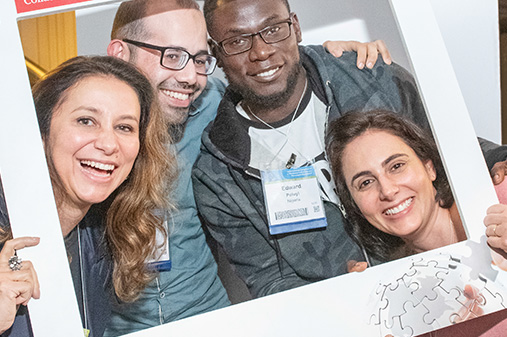
Prof. Carolyn Sue: I think in every dimension, it's really changed my career. Knowing all about the the field, having experts from all around the world share their knowledge, so that we can really understand our field to the highest level. The collegiality that we have. So whenever we come to the Congress, it's a time to really catch up with not only colleagues, but people that have really become our friends over the years.
And, we all share a love of the field of movement disorders and working collaboratively. And seeking that excellence and that, and pursuing that knowledge in our field, I think has really helped me to grow from a professional point of view. And it's certainly helped my career as we've taken on additional leadership roles as you work through some of things that you can do for the society.
And so I would encourage everybody out there to really get involved because it's [00:10:00] extremely enjoyable. You gain a lot of knowledge about the field and it will help your career as well if that's what you want to do.
Dr. Michele Matarazzo: Well, that idea of the MDS as a professional home come, comes up again and again. And as you were both mentioning, and this has also been highlighted by their colleagues that you grow not only scientifically, but also personally. The network that actually will follow you through different stages of your career.
And you're just the perfect example of how this work. That is great. And now we are using this interview, in this anniversary episode, not only to look back, but also to think about the future and what comes next. Now, drawing on your experience in leadership positions within the MDS, what do you hope to see in the next decades for the society?
As a whole, and also in particular, if you want, for the Asian and Oceanian region and of course you're now and in the coming years in position to actively shape this next step. Your opinion on this is very [00:11:00] relevant. Carolyn, what's at the top of your wishlist for the future?
Prof. Carolyn Sue: Well, obviously growth for the society and in a growing love for the field with increasing knowledge so that we can really help the patients that we are really looking after. I'd like to see greater scientific discovery. Which are more mechanistic so that we can prevent disease or slow the progression of the disease.
And again involvement at all levels it's so wonderful to work with colleagues from around the world in all of the regions. And to see not only a diversity, but also this sort of vertical sort of diversity where we see young members being involved in the society as well as the more senior members.
So I'd like to see that really align and also integrate so that we can achieve more together.
Dr. Michele Matarazzo: And you BJ, if you were to record another anniversary podcast in let's say 20 or 30 or 40 years, what would you like to be able to say about how the MDS has [00:12:00] evolved?
Prof. Beomseok Jeon: Well, I think MDS is already working on it, but I'd like to see it deepen it's global leadership by expanding equitable access to care and research participation to patients worldwide. Especially in the under-resourced region. I don't think it's gonna be resolved in 20 or 30 years, but MDS will certainly work on it and also embrace multidisciplinary and patient-centered models.
Dr. Michele Matarazzo: Great. All of this is very inspiring for the future. And I believe and I'm sure a lot of our listeners will also be part of the society for the years ahead. And so we will witness together what is going to actually happen in the future. Now before we wrap up, I would love to ask each of you for something a bit more personal, which is your favorite MDS moment or anecdote? I know it's probably difficult to just pick one, but it could be something scientific, I don't know, a session, a breakthrough or something more [00:13:00] personal. An encounter, someone, a mentor who actually has inspired you and you met through the MDS or even travel story that stayed with you.
BJ should we start with you?
Prof. Beomseok Jeon: Yes, I have a distinct memory of after dinner session during the AAN meeting. Which was packed with the enthusiastic crowd and Stanley Fahn and David Marsden discussing cases well after midnight. I think that's the passion that drives our society moving forward.
Dr. Michele Matarazzo: I wasn't part of those, but I've been listening about this very long video discussions by a lot of people. So that must been something very inspiring. And Carolyn, do you have any moment that stay with you that you want to share with our listeners?
Prof. Carolyn Sue: Oh, look, there are so many moments. It really is wonderful to think about all of those memories. I'll then go for a personal one then to make it a little bit broader. We've already talked about how we feel [00:14:00] that our society and our colleagues from around the world are really friends.
So I remember being at a Congress dinner, it had changed. So we usually, the the society has its congress at it at either in the middle of the year or at the end of the year, and this time because of the change of venue and time in COVID, it happened to be around my birthday.
And so I can remember having the Congress dinner on my birthday and having the MDS secretariat organize a special table where a couple of my friends could sit down and enjoy. So that we can enjoy the the dinner together. And so just to have for the first time a table of friends and who were from all around the world, the one table to celebrate an event was a really touching and wonderful time for me.
Dr. Michele Matarazzo: That's fantastic. Those are the, exactly the kinds of moments that shows you how the MDS is not just about data guidelines, but also about people and shared [00:15:00] experiences.
Prof. Carolyn Sue: That's right. Yeah. I think it's just symbolic of how how warm and how generous and how many friendships you can make in such a society whilst you are learning about your profession and field.
Dr. Michele Matarazzo: Thank you very much Professor Carolyn Sue and Professor Beomseok Jeon. Thank you both for taking the time to share your reflections and your experiences and your vision for the future and for everything you've done for the society and for the field of movement disorders in general. Thank you for being with me today.
Prof. Carolyn Sue: Thanks very much. It's great to see you and great to chat.
Prof. Beomseok Jeon: And thank you very much for this podcast.
Dr. Michele Matarazzo: And to all of you listening, thank you for joining us as we continue to celebrate this 40 years of science, collaboration and community within the International Parkinson Movement Disorder Society.
Thanks for listening and we'll see you in the next episode. [00:16:00]

Carolyn Sue, MD, PhD
Neuroscience Research Australia
University of New South Wales
Sydney, Australia

Beomseok Jeon, MD, PhD
Hyundae Hospital
Namyangju, South Korea

Neurologist and clinical researcher HM CINAC