


Blocking alpha-synuclein propagation with perampanel



Prof. Tiago Outeiro:
Hello and welcome to the MDS Podcast, the podcast channel of the International Parkinson and Movement Disorder Society. I'm Tiago Outeiro, a professor at the University Medical Center Göttingen in Germany, and today I have the pleasure of interviewing Dr. Norihito Uemura from Kyoto University and Osaka Metropolitan University in Japan.
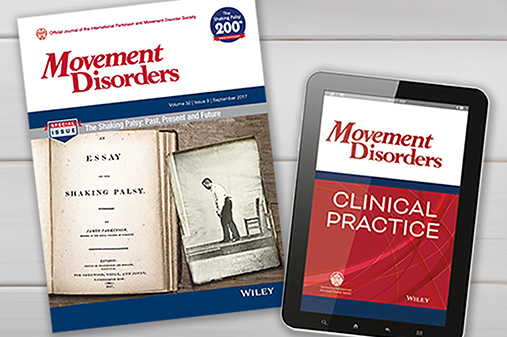
Dr. Uemura and his colleagues recently published a study in Movement Disorders Journal entitled "Perampanel blocks trans-synaptic alpha-synuclein propagation and neurodegeneration in a mouse model of Lewy body disease." So Dr. Uemura, welcome to the MDS podcast. It's a great pleasure hosting you today.
[00:00:46] Dr. Norihito Uemura:
Thank you very much for inviting me
[00:00:48] Prof. Tiago Outeiro: It's a pleasure.
So we thought your study was very interesting and your study focusing on a very current question related to the possible propagation of alpha-synuclein pathology as a key driver of Lewy body disease. So can you briefly explain what trans-synaptic propagation is and why you chose this specific process as a therapeutic target in this study?
View complete transcript
[00:01:13] Dr. Norihito Uemura:
Lewy body diseases are characterized by the spread of abnormal alpha-synuclein pathology through the brain. Accumulating evidence from autopsy studies and animal models suggests that this pathology propagates along neural circuits from one neuron to another neuron. We call this process trans-synaptic propagation, and it likely involves the release and uptake of pathogenic alpha-synuclein species.
Because this process is thought to drive disease progression, we believe it represe-represents an attractive target for disease-modifying therapies
[00:01:56] Prof. Tiago Outeiro:
Yeah. Very nice. So in previous work from your team, you showed that perampanel, which is an AMPA receptor antagonist, could block activity-dependent uptake of alpha-synuclein preformed fibrils in neurons. So what were the main open questions from your earlier work that motivated this new study?
[00:02:18] Dr. Norihito Uemura:
In our previous study we showed that the perampanel inhibits activity dependent neuronal uptake of alpha-synuclein fibers in cultured neurons and mouse brains. However it was still unclear whether blocking the initial uptake step would actually suppress the subsequent trans-synaptic spread of pathology throughout the brain.
In other words the mechanisms of neuronal uptake of fibers may differ from the pathological mechanisms of neuron to neuron transmission of alpha-synuclein. This is motivation for the current study
[00:03:03] Prof. Tiago Outeiro:
And so regarding the mechanism, so one of the key findings was that neuronal uptake of alpha-synuclein fibrils is dynamin-dependent but clathrin-independent, and that perampanel increases phosphorylated dynamin I levels in vivo. So this is a bit complicated for our listeners because these are very detailed molecular mechanisms.
So can you briefly explain how you interpret these results mechanistically, and what do they tell us about the specific endocytic pathways that handle alpha-synuclein? This is the pathways that enable the protein to be taken up by the cell. So mechanistically, how can we think about your findings?
[00:03:47] Dr. Norihito Uemura:
Yes. From this current study we know that dynamin-dependent endocytosis is closely associated with the spread of alpha-synuclein pathology in the brain. And this finding expand our therapeutic target in Lewy body diseases. In fact perampanel treatment increased the phosphorylated dynamin in mouse brains. This suggests that perampabel also blocked dynamin-dependent endocytosis in mouse brains.
This is a importance of our finding in this
[00:04:24] Prof. Tiago Outeiro:
Yeah. Okay. And now if we go to the behavioral effects that give us a better idea of the impact at the more physiological level. The treatment with perampanel in your study produced hypoactivity, anxiety-like behaviors, and reduced weight gain which maybe you would-- you weren't expecting.
So how should clinicians think about these potential side effects when considering perampanel or other AMPA antagonists as disease-modifying candidates? So we know you have the effect on the propagation, which is important, but then you have these side effects and behavioral effects. Do you think this somehow should concern clinicians in some way that we should consider these alterations.
[00:05:11] Dr. Norihito Uemura:
Actually, yeah, that is a limitation of this study. But despite this limitation perampanel is already used as a treatment for epilepsy and with established safe therapeutic ranges. Adverse effect may appear of adverse effect may differ between animal models and humans. And what I want to emphasize is that a safe therapeutic range is already established in human. I think that despite this adverse effect in mouse models we can consider moving to a clinical trial with perampanel.
[00:05:54] Prof. Tiago Outeiro:
No, this is very interesting and I was gonna pick up on this use of perampanel in epilepsy. Like you said, with established dose ranges so we know which doses to use in humans. so do you think we may be able to get any evidence from patients that have been treated with perampanel if one would get access to their brains to see if there's any effect on the pathology of alpha-synuclein?
I don't know if there are any brains available, but if we had access to brains from patients that were treated with perampanel, then maybe we could already see some evidence for an effect on the spreading of synuclein propagation. Maybe this would be useful.
[00:06:38] Dr. Norihito Uemura:
As far as I know there was one study focusing on perampanel treatment for wearing off in Parkinson's disease. But that study revealed that perampanel was not effective for wearing off in Parkinson's disease. I don't know that as far as I know, there is no report looking at the efficacy of perampanel on alpha-synuclein spreading.
[00:07:04] Prof. Tiago Outeiro:
Yeah, so there's a lot to be done. That's clear, and that's good because, that's how science works. So what do you think would be the next steps for your group, maybe you're already working on it to follow up on your findings? What would be the next questions?
[00:07:20] Dr. Norihito Uemura:
Yeah. Despite the limitation of the study, as I mentioned adverse effect in mouse models we are considering whether we can move to a clinical trial with perampanel in Parkinson's disease. One possible relevant study with this mouse study.
One possible clinical trial is that focusing on Parkinson's disease patients with hyposmia. Several previous studies reported that the Parkinson's disease patients with hyposmia have higher risk of developing dementia compared to the Parkinson's disease patients without hyposmia.
We are thinking about the clinical trial of efficacy of perampanel against developing of dementia in Parkinson's disease patients with hyposmia.
[00:08:12] Prof. Tiago Outeiro:
Okay. So that would be a group of people where the trial would make sense. So we've come to the end, so I would like to just ask you, is there anything else you would like to highlight about your study? Anything we may have not covered? Any important point you would like to make.
[00:08:27] Dr. Norihito Uemura:
What I want to emphasize is that this study is not limited to a single drug. This study revealed that we can evaluate that effect of disease-modifying therapy against synaptic propagation of alpha-synuclein in mouse models.
With this strategy, we can evaluate other potential drugs to evaluate the efficacy against the trunk synaptic propagation of alpha-synuclein. The target to be promising, and I hope that this modifying therapy against this target would be available in Lewy body diseases.
[00:09:06] Prof. Tiago Outeiro:
Yeah. Thank you. That's a very good point because you established a model that can be very useful to test other types of molecules in addition. And so I think this is also a very important message from your study. Of course, you report on perampanel, but with the model that you have, maybe other drugs can be tested, and this could be proved to be important.
So thank you so much. It was a pleasure talking to you and learning about your findings. Thank you for your time.
[00:09:33] Dr. Norihito Uemura:
It's great talking with you. Thank you very much
[00:09:36] Prof. Tiago Outeiro:
Thank you. So we've just interviewed Dr. Uemura from Kyoto University and Osaka Metropolitan University in Japan about their recent publication in Movement Disorders. So thank you all for listening and join us in our upcoming podcasts.
Norihito Uemura, MD, PhD
Osaka Metropolitan University
Osaka, Japan

Director of the Department of Experimental Neurodegeneration